Huawei brings near-packaged optics to AI with Atlas 960E superpod
Huawei unveiled its Atlas 960E superpod, an AI computing system designed to connect up to 4,096 neural processing units (NPUs) using near-packaged optics (NPO). The system aims to reduce power consumption and data transfer bottlenecks between chips. Announced at Huawei Connect 2026, the Atlas 960E combines Huawei’s UnifiedBus interconnect with its Hi-ONE optical interconnect engine. Huawei claims the system delivers eight exaflops at FP8 precision and can reduce power consumption by over 550 kilowatts compared to conventional modules.
Huawei's Atlas 960E superpod addresses a critical constraint in AI at scale: data movement. The company's NPO approach, using its Hi-ONE engine, aims to shorten electrical paths before optical conversion. This differs from Nvidia and Broadcom's co-packaged optics (CPO), which integrate optical engines directly into the chip package. Huawei argues NPO offers easier manufacturing and servicing, citing its pluggable components.
This move positions Huawei to address the growing demand for high-performance AI infrastructure within China. As US export controls limit access to advanced Western AI chips, Huawei's ability to deliver integrated solutions becomes crucial for domestic AI development. The Atlas 960E, with its claimed 550 kilowatt power reduction, offers a compelling alternative for large-scale AI training in the region.
The test for Huawei is whether its NPO proposal gains traction with the Optical Internetworking Forum (OIF). Industry standardization would broaden NPO's adoption and potentially establish it as a viable evolutionary step toward CPO, as suggested by OIF officials. Without interoperability, NPO risks remaining a proprietary solution, limiting its market reach beyond Huawei's own ecosystem.
Related reading
6 stories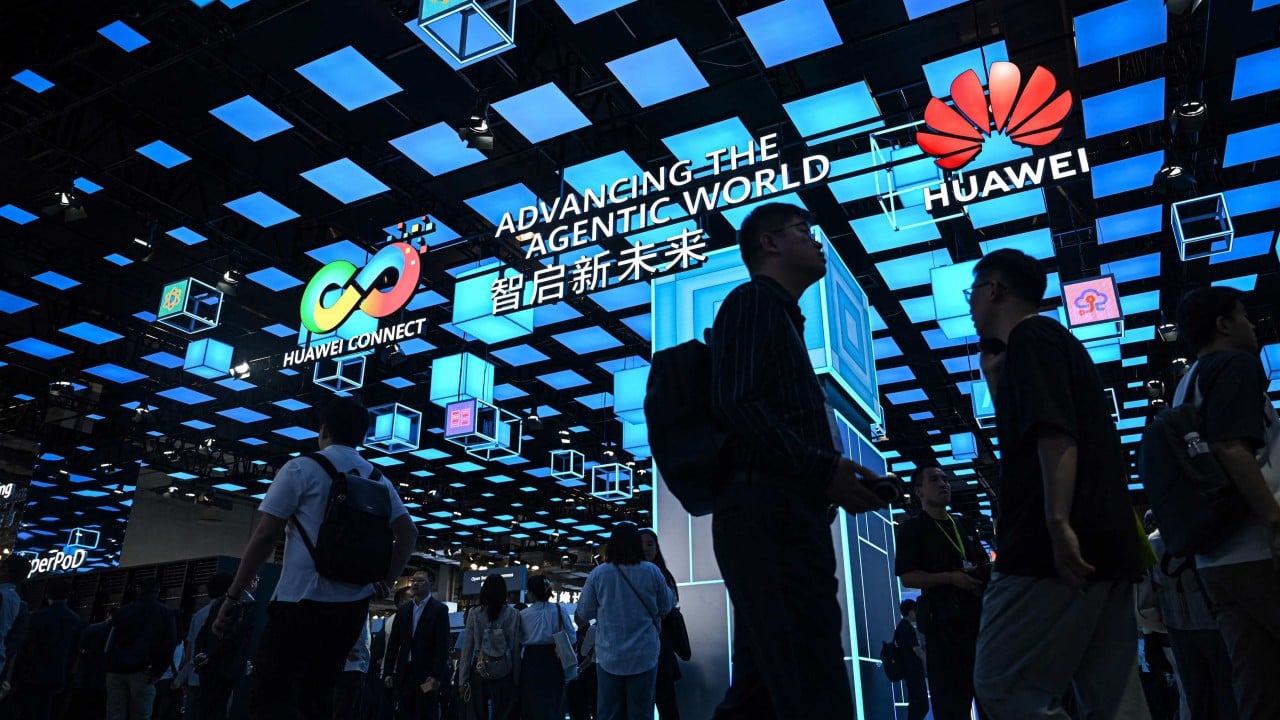
China to see major shift to Huawei for AI model training in 2027: rotating chair
Our past coverage highlighted Huawei's projected dominance in China's AI model training, a trend reinforced by this superpod launch.

Will AI adoption shrink office space? Asia-Pacific firms are on the fence in survey
Chip foundries better insulated in an AI slowdown than Asia-Pacific tech peers, S&P says

OCBC Extends Bank of Ningbo Partnership as 20 Percent Shareholder
Why Qianjue’s founder expects no “ChatGPT moment” for robotics