China’s High-Tech Boom Has Yet to Fill the Economic Gap Left by Real Estate, Says Analyst
China's high-tech and green industries are not yet filling the economic gap left by the contracting real estate market. An International Monetary Fund analysis confirms this. Property sales fell from 18 trillion yuan in 2021 to 8 trillion yuan in 2025. This decline impacts demand, jobs, and fiscal revenue beyond the property sector itself.
China's shift to high-tech industries faces a significant employment challenge. Sectors like AI, EVs, and semiconductors are capital-intensive. They do not generate jobs at the same scale as traditional industries. Analyst Li Tingqian notes these sectors offer "almost no help with general employment for the ordinary population."
The impact on traditional industries is clear. Steel consumption fell 20.9 percent from 2020 through 2025. Steel production dropped 9.8 percent in the same period. Major steelmakers saw profits fall 40 percent in the first half of 2026. This reflects a broader struggle in sectors dependent on real estate.
The National Bureau of Statistics reported China's "three new" economy accounted for 18.39 percent of GDP in 2025. However, manufacturing alone employed 104.8 million people as of late 2023. Construction employed another 51.2 million. High-tech growth must accelerate significantly to offset these losses. The test for Beijing is whether it can stimulate domestic consumption to absorb new tech output.
Share this article
Related reading
6 stories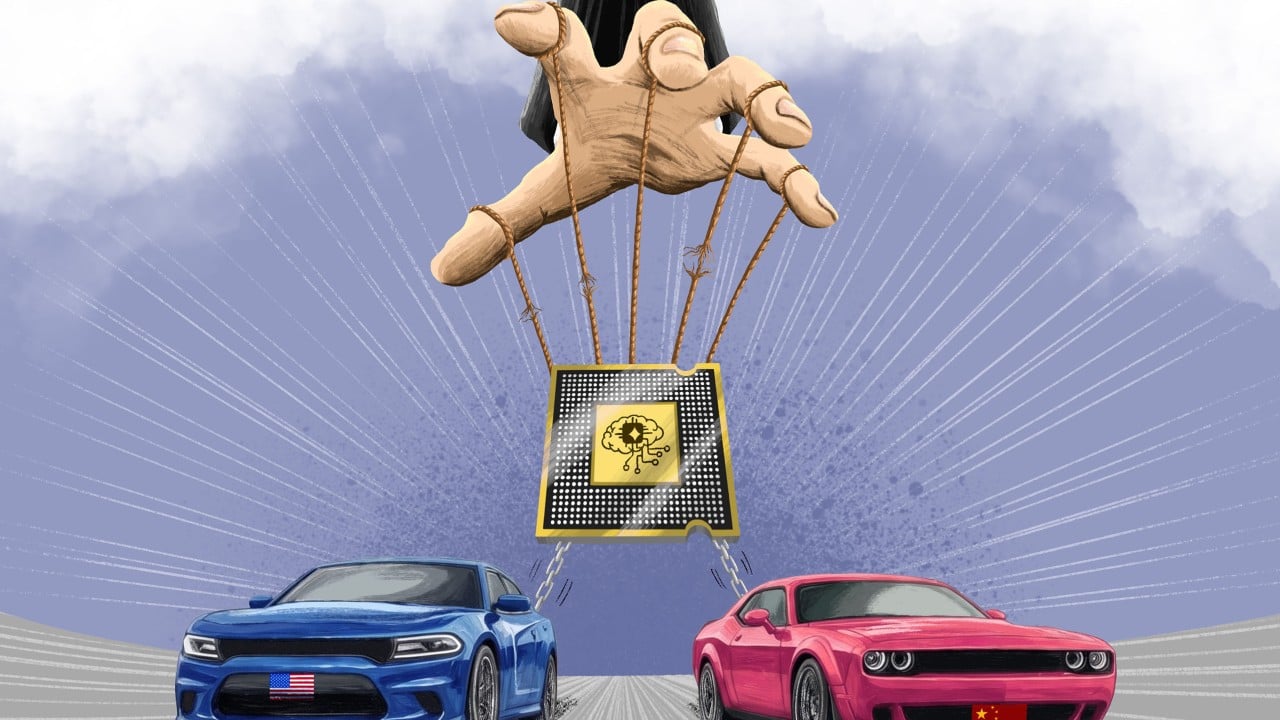
In the US-China AI race, the real fight is keeping humans in control
Our earlier analysis explored the US-China AI race, touching on the broader implications of advanced technology.

How Can Banks Launch New Products Without Replacing Their Core?

Wise Rolls Out Overseas QR Payments, Customisable eSIM Plans

NYC Council Speaker Julie Menin warns of AI's 'existential' risks

What Are OpenAI Dots And Do You Need Them?