What Sputnik couldn’t do to American science, Beijing has
The United States is shifting its technology strategy, adopting an approach that mirrors China's focus on tech leadership as a national security imperative. Washington is now actively intervening in the tech sector, a departure from its historical stance of advising allies against picking winners. This new strategy involves the US government holding stakes in approximately 30 firms, valued at US$26.7 billion, including a 9.9 percent ownership in Intel and a golden share in US Steel. Additionally, companies like Nvidia and AMD reportedly ceded 15 percent of their China chip sale revenues in 2025 for export licenses, reflecting a more assertive government role in tech and trade. The shift also directs federal agencies to align contracts with competing vendors and expedite clearances to accelerate expertise transfer between research, industry, and government departments.
The US's new tech strategy, as detailed by SCMP, marks a significant pivot, embracing a state-led approach to technology development that mirrors China's model. This shift is not merely about competition; it reflects a deep-seated recognition in Washington that tech leadership is fundamental to national security. For Asian markets, this means a more complex and potentially restrictive trade environment, particularly in semiconductors and advanced computing. The US government's direct equity stakes, such as 9.9 percent in Intel, signal a long-term commitment to domestic tech industries, which could lead to further decoupling pressures on global supply chains. The implications for Asian tech companies are substantial. The requirement for Nvidia and AMD to surrender 15 percent of their China chip sale revenues for export licenses, for instance, sets a precedent for how the US might exert control over critical technologies. This could force Asian manufacturers and developers to choose between US and Chinese markets, or to localize production and R&D more aggressively. The thing to watch is how other nations, particularly those with significant tech sectors like South Korea and Taiwan, adapt their own industrial policies in response to this more interventionist US stance, especially concerning chip manufacturing and AI development.
Related reading
6 stories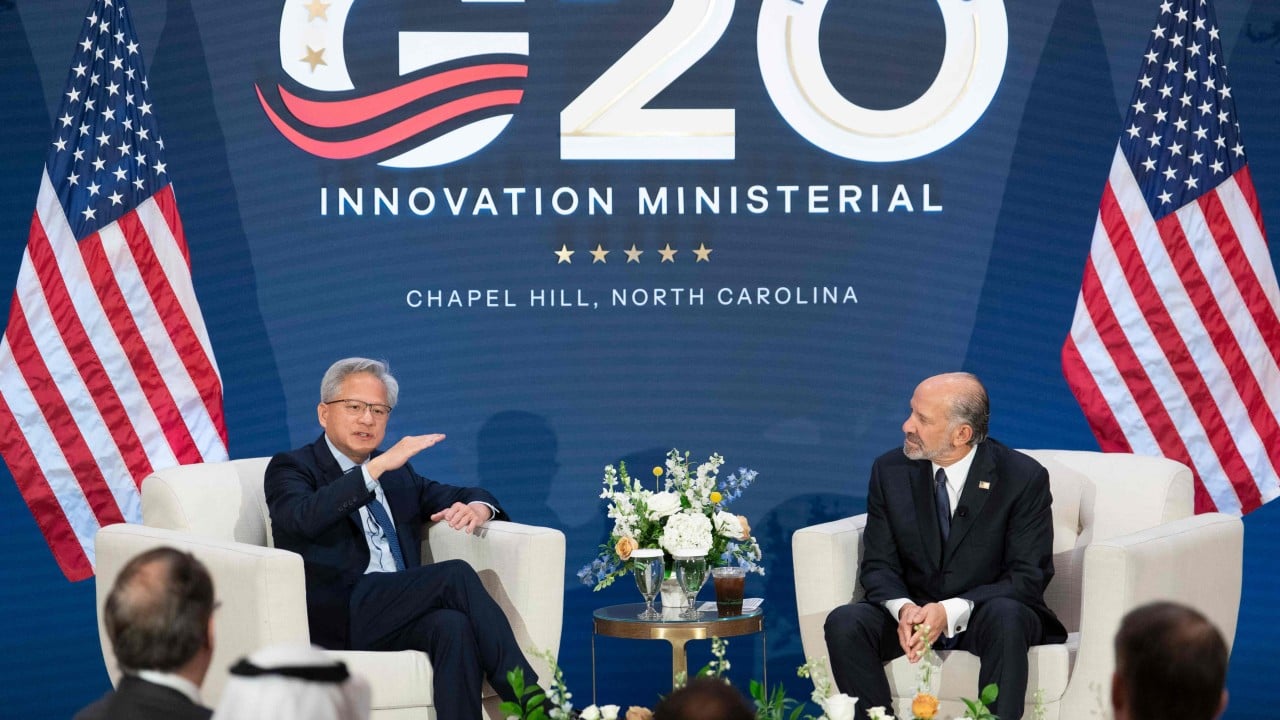
US-China AI agreement, G20 trade spat, inflation data
Our previous coverage highlighted US-China AI agreements and trade spats, echoing the current geopolitical tech tensions.
Deleveraging clouds China’s AI trade as rising US Treasury yields, inflation fears persist
We previously examined how deleveraging and inflation fears cloud China's AI trade amid rising US Treasury yields.

If driverless cars already work, why aren’t they everywhere?
People’s Daily rejects US claims of malicious AI distillation, warns of countermeasures

Sumsub Launches Workforce Verification as Deepfake Risks Grow