Deleveraging clouds China’s AI trade as rising US Treasury yields, inflation fears persist
Chinese leveraged traders are continuing to reduce their stock bets, driven by concerns over rising global bond yields and persistent oil price shocks. The outstanding balance of stocks bought with borrowed money fell to US$390.1 billion on Thursday, a 13 percent drop from the June 25 high of US$447.8 billion. This deleveraging trend, which began with a July sell-off in tech stocks, reflects subdued risk appetite and a cautious global market. The Star Market 50 index, a key gauge for China's AI sector, is nearing its previous low after a 26 percent tumble in July.
The deleveraging in China's stock market, particularly within the AI trade, points to a broader caution among investors. The outstanding balance of stocks bought with borrowed money has dropped to US$390.1 billion, a significant decrease from its June peak. This unwinding of positions is not merely a reaction to rising US Treasury yields and inflation fears; it also reflects a lack of broad stimulus from Beijing, even as economic data underperformed in July. For Asia's tech sector, especially in China, this sustained deleveraging suggests that a strong rebound in AI-related stocks may remain elusive. The Star Market 50 index, central to China's AI ambitions, is approaching its July lows, indicating that investor sentiment has not recovered. The key thing to watch is whether Beijing will eventually introduce a more substantial stimulus to counter the subdued risk appetite, which could provide a much-needed boost to the AI trade.
Related reading
6 stories
How China Works author on the data economy, robots and AI
Our author on How China Works previously explored the data economy, robots, and AI in the Chinese context.
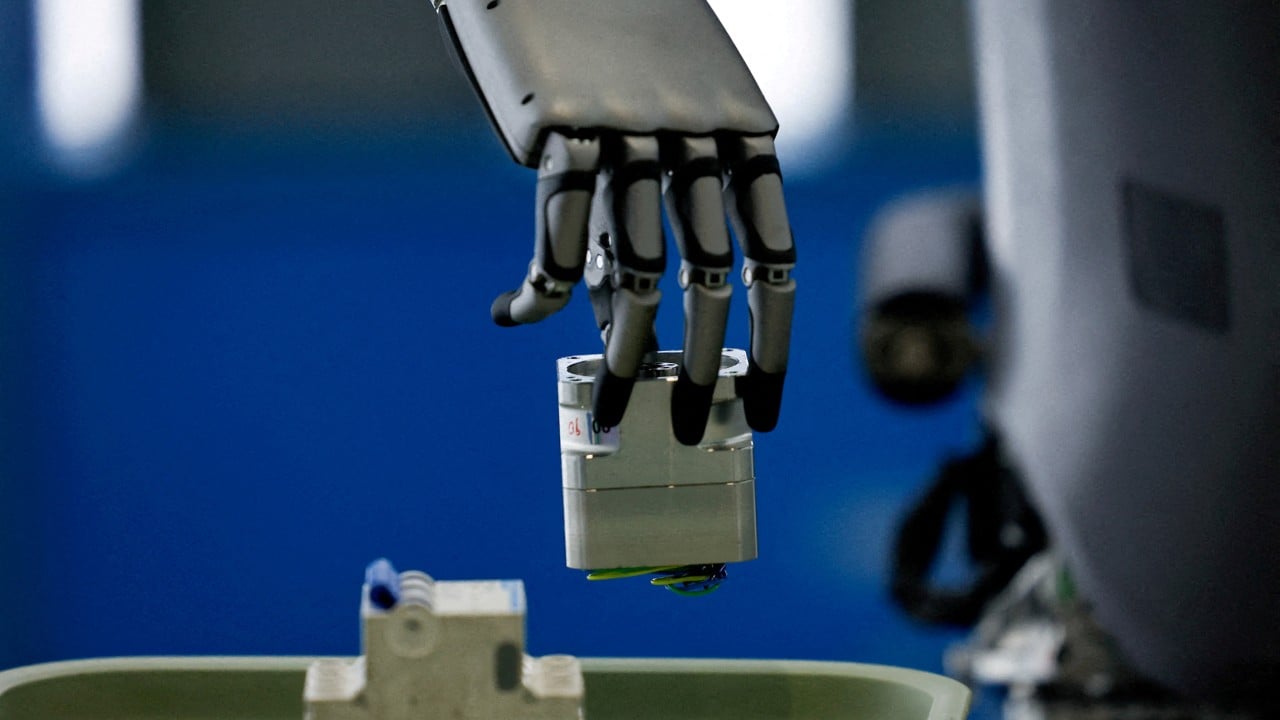
China’s robot revolution may not arrive in the way you expect
We previously examined how China's robot revolution might unfold, offering a different perspective on AI's future.
People’s Daily rejects US claims of malicious AI distillation, warns of countermeasures

Databricks to Invest Over US$350 Million in Singapore, Double Its Workforce
ByteDance’s AI-enhanced short-drama app eclipses China’s Netflix rivals combined