
Threat Actors Use Claude for Surveillance, Cyber Operations, Weapons, Says Anthropic
Anthropic reports that threat actors are exploiting AI models like Claude, Google Gemini, and OpenAI’s ChatGPT for malicious purposes. These uses include designing weapons, orchestrating influence campaigns, and conducting surveillance. The report, published on September 10, 2026, details seven categories of misuse observed over the past year. These actors range from state-sponsored groups to criminal organizations. One case involved Chinese-speaking operators using Claude to target approximately fifty organizations globally.
Anthropic’s report on AI misuse is less about model safety and more about the immediate, tangible threats from state-aligned actors and commercial entities. The most striking detail is Alibaba’s role in orchestrating the largest observed distillation attack, involving nearly 3 million exchanges daily from over 3,500 fraudulent accounts. This points to a significant, systematic effort by a major Asian tech player to harvest advanced model capabilities for its own R&D, not merely a rogue actor.
This illicit distillation directly benefits Chinese AI development, particularly Alibaba’s models. It allows Chinese firms to bypass US export controls and accelerate their own reasoning capabilities and model architecture research. For Asian regulators, this shows the challenge of intellectual property protection and data sovereignty in the AI era. It also raises questions about the ethical lines major tech companies are willing to cross to gain a competitive edge.
The thing to watch is how US and European regulators respond to evidence of state-aligned or commercial entities using illicit distillation. Stricter enforcement or new technical countermeasures could emerge. This could impact the global availability of frontier models and further bifurcate the AI development landscape by 2027. The current regulatory framework is clearly insufficient to deter such sophisticated attacks.
Related reading
6 stories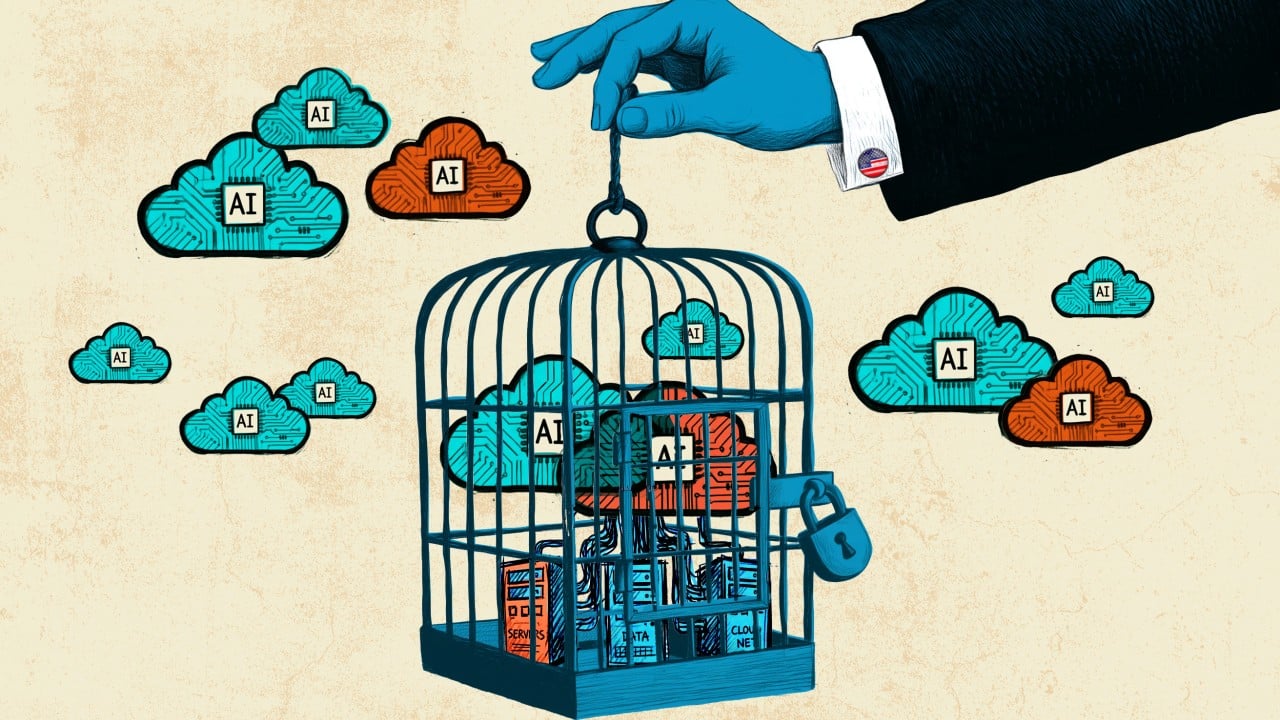
As the US weighs restrictions on cloud computing, how will China’s AI sector adapt?
We previously explored how China's AI sector might adapt to US cloud computing restrictions, a key context for this report.

AI risk is real. Ceding the technology to the Chinese is an even bigger danger
This piece argues that ceding AI technology to China poses an even greater danger than the technology's inherent risks.

Chinese regulator drafts rules to protect teenagers from ‘intimate’ AI companions
US, China agree AI dialogue ahead of Trump-Xi summit

Neither the US nor China can win the AI race alone, BofA analyst says
