
Jensen Huang returns to Korea wanting more — chips, robots and a research hub
Nvidia CEO Jensen Huang recently visited South Korea, seeking increased memory chip supply for Nvidia's new product lines and solidifying a robotics partnership with Hyundai Motor. During his visit, Huang met with prominent Korean business leaders from SK, LG, Naver, and Hyundai, emphasizing the importance of these collaborations for Nvidia's growth. He highlighted that new Nvidia products, including Vera Rubin and RTX Spark, will necessitate more high bandwidth memory (HBM) and low-power double data rate (LPDDR) memory from Korean chipmakers. Additionally, Nvidia, Hyundai Motor, and the Korean government are reportedly finalizing plans to establish an AI research and development center in Seoul, signaling a deeper commitment to the region. This visit underscores Korea's pivotal role in Nvidia's global strategy for AI and robotics development.
Jensen Huang's visit to Korea underscores the nation's critical position in the global semiconductor supply chain, particularly for advanced memory chips like HBM and LPDDR, which are essential for next-generation AI and computing. Nvidia's demand for these components highlights the escalating competition and innovation within the AI hardware sector, where Korean manufacturers like SK Hynix and Samsung are key players. This demand will likely drive further investment and R&D in Korea's memory chip industry, potentially solidifying its lead in a crucial technology. The emphasis on robotics, particularly through the partnership with Hyundai Motor and the planned AI research center, signals a strategic pivot for Nvidia beyond traditional GPU sales. This move positions Korea as a vital hub not just for chip manufacturing, but also for AI research and the development of intelligent systems, including autonomous vehicles and industrial robotics. This integrated approach, combining hardware supply with advanced AI development, could create a powerful ecosystem in Korea, attracting talent and fostering further innovation in the region. The collaboration with major Korean conglomerates across diverse sectors (chips, automotive, internet) reflects a broader trend of cross-industry partnerships driving technological advancement in Asia.
Share this article
Related reading
6 stories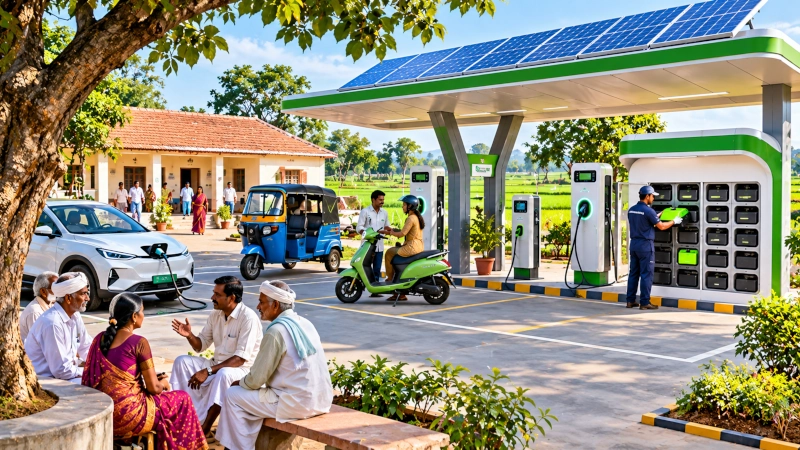
India Plans EV Charging and Battery-Swapping Stations on Panchayat Land to Expand Rural Electric Mobility

Build Multi-Tenant RAG in Next.js Without Leaking Customer Data

DeepSeek Unveils 'Super Agent' to Run Multiple Tasks at Once

Samsung's Jay Y. Lee Visits Japan Packaging Lab, Calls Tech Key to AI Chips

KT to Invest 18 Trillion Won to Become Asia's AX Hub
