Humanoid Robots and China’s Vision of the Future
China hosted the World Humanoid Robot Games in Beijing this August, featuring over 2,000 robots competing in 51 events. One notable participant, the Chinese humanoid robot Tiangong Ultra, completed a 100-meter sprint in 8.64 seconds, surpassing Usain Bolt's human world record. The event showcased robots performing tasks from athletics to household chores, reflecting China's significant investment in its humanoid robotics industry. Chinese state media emphasized the robots' potential for industrial and domestic applications, contrasting with Western coverage that often framed the event as a display of state power. This demonstration is part of China's broader strategy to develop commercial robotics for factories, logistics, and healthcare.
The World Humanoid Robot Games in Beijing, where Tiangong Ultra ran 100 meters in 8.64 seconds, offers a clear view into China's long-term industrial strategy. This is not merely a spectacle; it is a testbed for integrating humanoid robots into manufacturing, logistics, and elder care. China's investment in this sector points to a future where these machines are integral to everyday life and industry, moving beyond laboratory settings. The focus on practical applications in Chinese state media, compared to Western interpretations of the event as political theater, underscores a fundamental difference in how technological futures are envisioned and communicated. The thing to watch is how quickly Chinese companies can transition these prototypes into scalable commercial products. While the games demonstrate capability, the real challenge lies in mass production and deployment across various sectors. Beijing’s ambition to make technological development a national priority means continued heavy investment, but the success will be measured by market adoption and the tangible impact on productivity and daily life in Asia. This push also reflects a broader Sinofuturism, where China develops its own distinct vision for technology's role in society.
Related reading
6 stories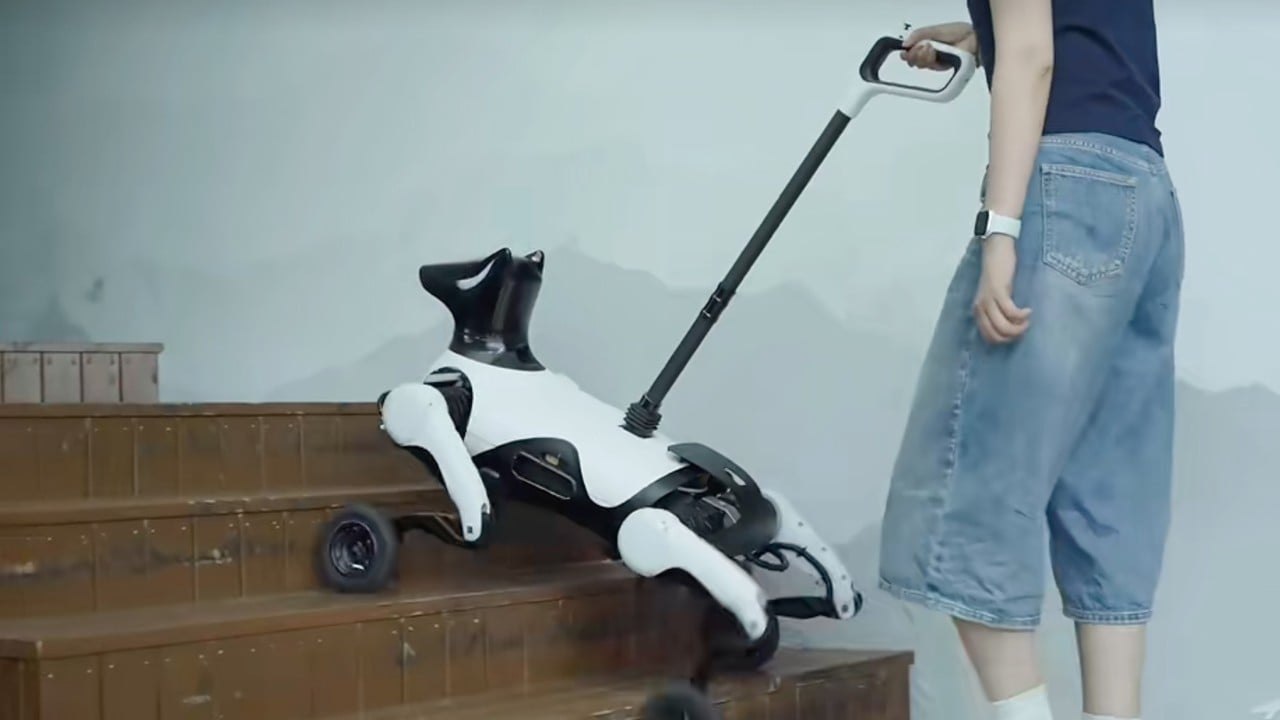
Robot guide dog debuts in China amid severe lack of furry counterparts
Our past coverage highlighted China's practical applications of robotics, including a robot guide dog for daily life.

People’s Daily rejects US claims of malicious AI distillation, warns of countermeasures

Databricks to Invest Over US$350 Million in Singapore, Double Its Workforce

Personetics Launches AI Banking Console for Relationship Managers

Anthropic Sets October Launch for Singapore Office With Local Hiring Planned