China’s AI compute surge heavily reliant on US chips, offshore cloud access: report
China's access to AI computing power is projected to double next year, yet US-designed chips are expected to constitute about 65 per cent of this capacity, indicating a continued reliance on foreign hardware. Despite a reported 16-fold US advantage in AI training compute, leading Chinese models lag their American counterparts by only 6.5 months, according to the Institute for Progress (IFP).
The anticipated growth in China's AI computing power, measured in "H100-equivalents", a benchmark against Nvidia's data-centre graphics processing units crucial for AI training, highlights the country's expanding capability. This expansion, however, is significantly underpinned by foreign technology, with US-designed chips forecasted to provide the majority of this capacity. For companies developing or utilizing AI models in China, this suggests a continued dependency on external supply chains for fundamental hardware resources.
While the volume of AI training compute available to Chinese entities is considerably less than that in the US, the reported performance gap between leading Chinese and American AI models is relatively narrow, at just 6.5 months. This suggests that despite a reported compute disadvantage, Chinese developers may be achieving a notable degree of efficiency in their model development and training processes. This efficiency could stem from optimized algorithms, strategic data utilization, or focused application areas.
The ability of Chinese models to close the performance gap with significantly less raw compute power indicates that the relationship between computing capacity and model advancement is not purely linear. For businesses evaluating AI development or adoption, this implies that raw compute numbers, while important, do not solely dictate the pace of innovation or the quality of outcomes. Strategic resource allocation and algorithmic efficiency appear to play a substantial role in bridging hardware disparities.
Share this article
Related reading
6 stories
Cambricon’s third quarter profit surges 148% to US$210m amid push to replace Nvidia chips
We previously reported on Chinese chipmakers like Cambricon pushing to replace Nvidia chips, a key part of this story.
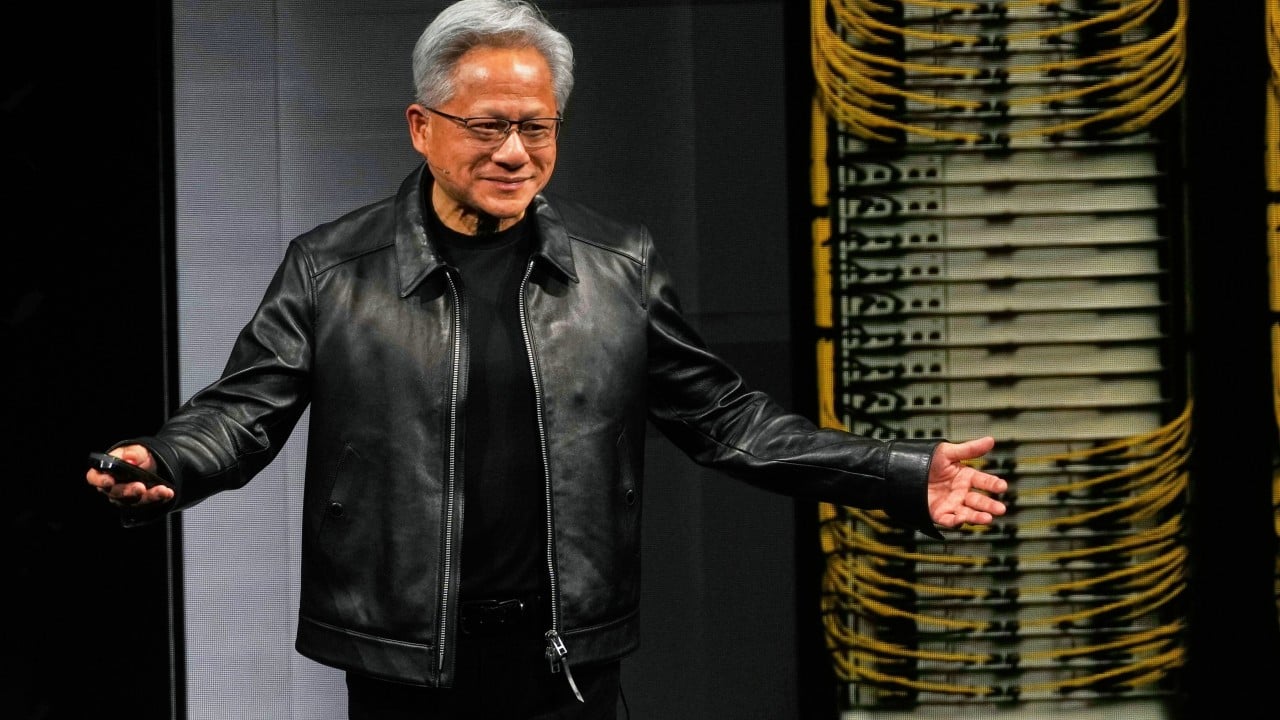
Nvidia’s Jensen Huang brings ‘sovereign AI’ push to Kazakhstan, shrugs off bubble fears
Nvidia's CEO Jensen Huang has been advocating for 'sovereign AI', a concept directly challenged by China's reliance on US chips.

I built a small engine that gives local LLMs real tools

Mergetober: keeping an agent in sync with a Sanity CMS, with cognee

OpenAI Teases GPT-6.1 Astra Amid Relentless Hype Around The Mysterious GPT-6.2 Betelgeuse Model, As Another Evidence Surfaces Showing Kimi K3.1 Pro And GLM-5.3 As Products Of Distillation