AI job losses set to rein in office demand in developed Asia-Pacific economies: report
Office job displacement due to AI could reduce growth in office space demand across developed Asia-Pacific economies by five percentage points, according to property consultancy CBRE. The firm's report indicates 3.9 percent of office jobs in these markets are vulnerable to AI-driven replacement, compared to 1.7 percent in developing markets.
The CBRE report offers a specific, quantitative estimate for how AI adoption might influence office space demand. The projected slowdown in growth for occupied office space, from 18 percent to 13 percent by 2030 under a moderate-displacement scenario, suggests that while AI may not halt expansion, it could temper its pace. This distinction helps clarify the potential scale of AI's impact on a tangible market.
The report's differentiation between developed and developing markets in the Asia-Pacific region highlights varying exposure to AI-driven job displacement. Developed economies, including Hong Kong, Singapore, Japan, South Korea, Taiwan, Australia, and New Zealand, face a higher vulnerability rate for office jobs at 3.9 percent. This contrasts with developing markets like mainland China, India, and Southeast Asian nations, where the rate is 1.7 percent. This difference might reflect variations in economic structure, technological adoption rates, or the nature of office work prevalent in these regions.
The analysis separates the impact of AI on job displacement from its broader productivity gains. CBRE's base case, which assumes productivity improvements without job displacement, forecasts higher office space growth. The reduction in this growth under a displacement scenario indicates that the market is sensitive to how AI integration affects employment figures, rather than just overall economic output. This suggests that the net effect of AI on real estate will depend on the balance between new demand generated by AI-driven growth and reduced demand from job automation.
Share this article
Related reading
6 stories
China, US discuss AI as chip stock rout hits Asian markets
We previously covered discussions between China and the US on AI, and how chip stock routs impacted Asian markets.

TSMC confirms talks with Elon Musk over Texas ‘Terafab’ but insists on operational control
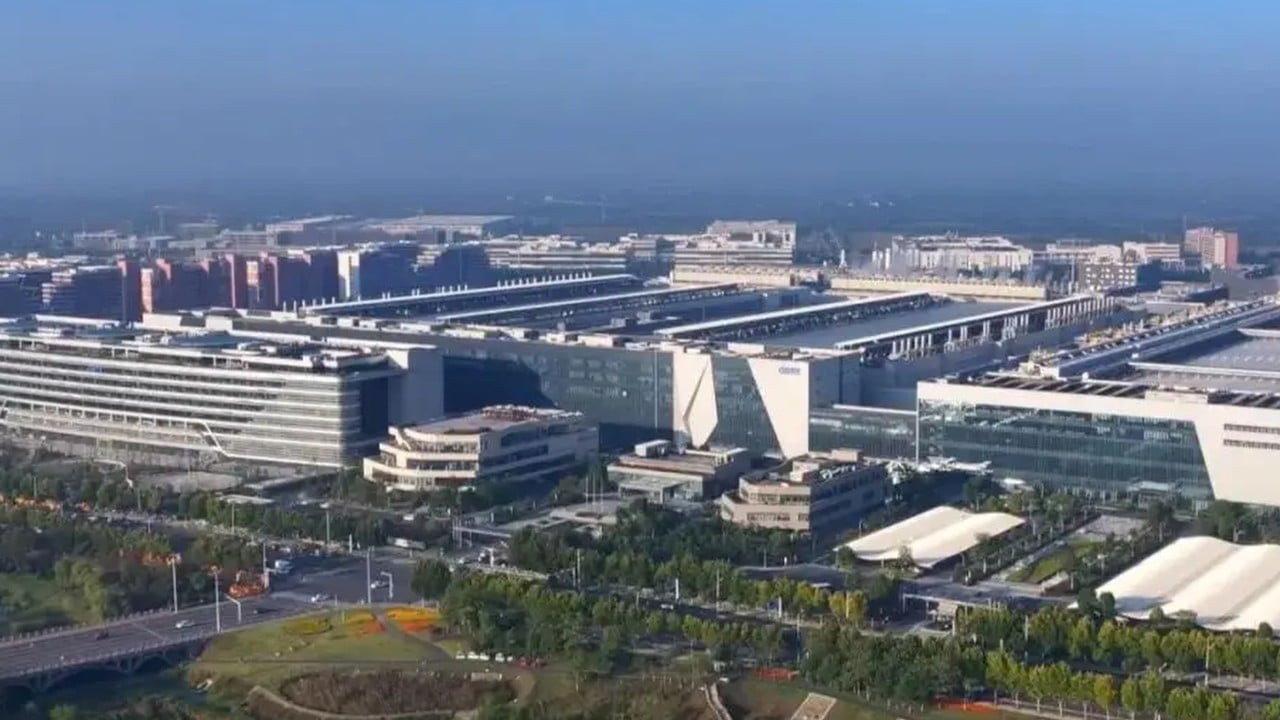
China’s CXMT gets pledge of support as provincial party chief vows chip-industry expansion

Start-up unveils prototype ‘heart’ of EUV lithography amid China chipmaking push

Figma announces new features to define how agents work on its platform