
AI boom fuels ‘k-shaped’ divide
Taiwan’s AI boom has created a “K-shaped” economic divide. High-tech and AI-related industries are growing rapidly, while traditional sectors struggle. Economist Ju Haw notes that large tech firms attract investment, skilled workers, and energy, leaving traditional industries resource-poor. This uneven growth means Taiwan’s strong GDP forecasts, including an 11.05 percent increase this year, mask unequal wealth distribution. Average annual pay at semiconductor firms was NT$2.58 million last year, nearly five times more than in tourism.
Taiwan’s economic growth is not reaching its broader business community. The AI boom creates a "crowding-out effect," with capital and talent flowing disproportionately to high-tech. This is evident in the NT$2.58 million average pay for semiconductor workers last year, starkly contrasting with NT$543,000 in tourism. Traditional sectors face high barriers to AI adoption, lacking capital and skilled manpower for transformation.
The test for Taiwan is how it addresses this widening gap. The government’s proposal to allow traditional industries to rent or share AI infrastructure is a start. This could lower adoption barriers for SMEs, helping them integrate AI into existing operations. Without such measures, the benefits of Taiwan’s AI-driven GDP growth will remain concentrated, exacerbating economic inequality.
The thing to watch is whether these government initiatives translate into tangible support for traditional businesses. Eslite Spectrum Corp’s 10 percent increase in store visits, partly attributed to AI, shows some retail sectors can benefit. The challenge is scaling this beyond individual success stories to impact the broader economy by 2027.
Share this article
Related reading
6 stories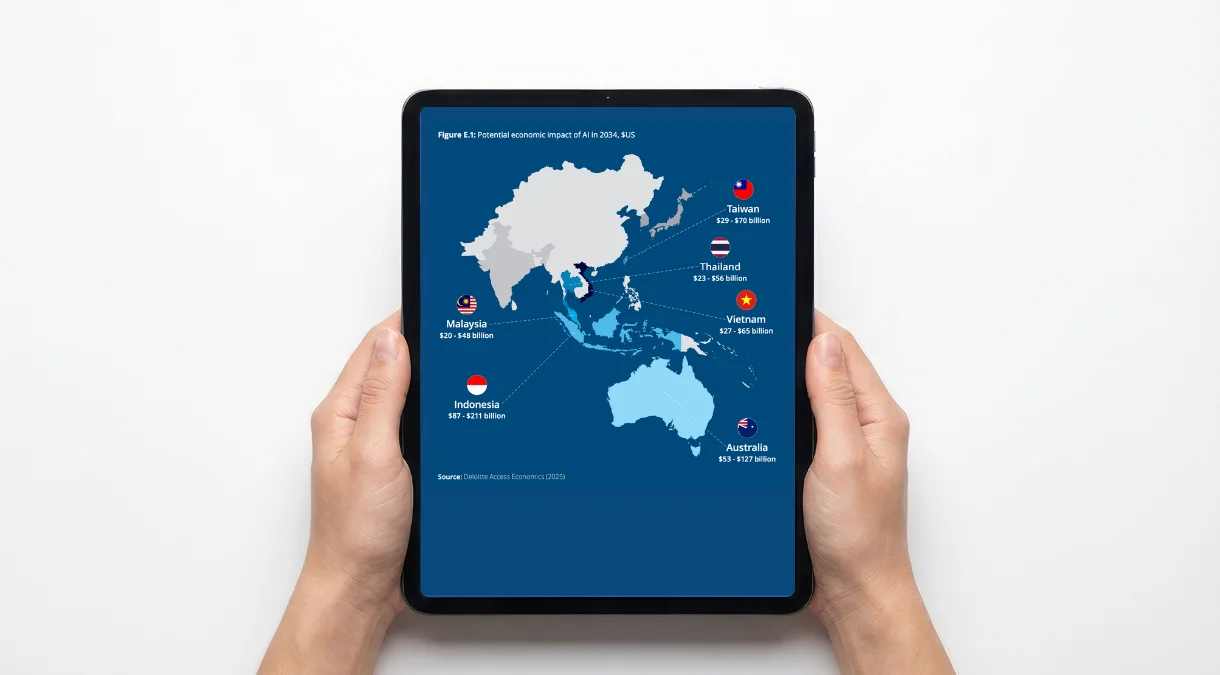
Demand for Digital Tools, Integration, Flexible Payments on the Rise Among APAC SMEs
Our prior coverage found APAC SMEs are increasingly seeking digital tools and integration, mirroring Taiwan's challenge.
How Can Banks Launch New Products Without Replacing Their Core?

Wise Rolls Out Overseas QR Payments, Customisable eSIM Plans

HackerRank’s AI interviewer offers a glimpse into what job interviews could become

Business News | The Next Search Frontier: How Ripplix Is Helping Brands Navigate AI Discovery
