
A Reliable, High-Performance Alternative to Legacy Autopilots: Upbeat Launches Bluemag Pi with Onboard AI
Upbeat Technology launched Bluemag Pi, an AI flight controller for drones and unmanned surface vessels. The device integrates AI inference with real-time flight control on a single board, using Upbeat's UP301 system-on-chip with SiFive RISC-V processor cores. This aims to provide a dependable alternative to legacy autopilots that often require separate companion computers for AI capabilities.
The core problem Bluemag Pi addresses is the architectural gap in many existing drone autopilots. As the drone market grows, particularly for AI-enabled, long-endurance platforms, many flight controllers still rely on general-purpose processors without dedicated AI acceleration. This forces drone developers to add a separate companion computer for onboard intelligence, increasing complexity and potentially compromising reliability.
Upbeat's solution integrates both flight-critical control and AI inference onto one board. The UP301 chip's dual-core RISC-V architecture separates time-critical flight tasks from AI and system management, aiming to improve responsiveness and reliability. This design allows for dependable altitude, attitude, and velocity estimates, even if a single sensor fails, through integrated IMUs, a barometer, dual GNSS receivers, and sensor-fusion software.
The launch suggests a potential shift towards more integrated and purpose-built hardware for autonomous systems. By offering a single board that handles both control and AI inference, Upbeat aims to simplify development and enhance the performance of advanced drones. The compatibility with leading open-source flight-control stacks like PX4, ArduPilot, and Betaflight could ease adoption for developers already familiar with these ecosystems.
The broader implication is that specialized, low-power compute architectures, like those leveraging RISC-V for distinct tasks, are becoming more critical for real-time, safety-critical applications in autonomous flight. This approach could set a precedent for how future drone and robotics platforms balance complex AI processing with stringent real-time performance requirements.
Share this article
Related reading
6 stories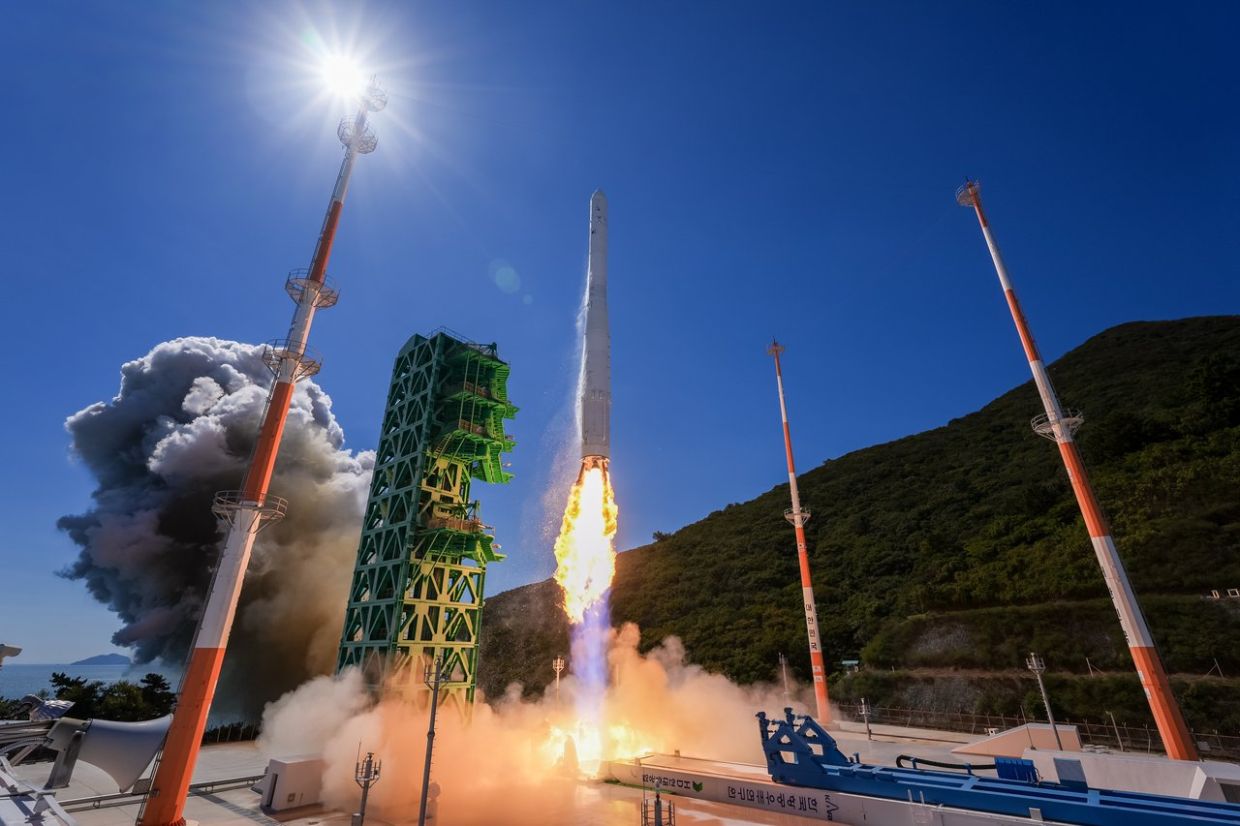
South Korea's Nuri nails five-satellite mission, eyes commercial future
South Korea's Nuri rocket program, like this drone technology, highlights Asia's growing capabilities in advanced autonomous systems.

Singapore Says ScamShield Is Not Designed for Investment Background Checks

StanChart to Offer Digital Asset Custody Services in Singapore

AIMCONNECT 2026 Forum to Explore How AI Is Changing Car Sales, Financing

Hong Kong and Singapore pitch rival gold hubs to bullion market
