What the US and China Should Discuss at APEC
U.S. and Chinese leaders are intensifying AI dialogue, with a second presidential summit in three months scheduled for November in Shenzhen. While discussions have established a channel for AI incident communication and addressed risks, the economic challenges of the AI sector, including funding demands and return on investment, have not yet been a formal agenda item.
Recent high-level meetings between the United States and China, including presidential summits and economic consultations, have established a dedicated channel for discussing AI risks and benefits. This progress signals a willingness from both sides to manage the potential dangers of AI, with leaders expressing support for continued dialogue and joint prevention of misuse.
Despite diplomatic progress on AI safety, the financial sustainability of the AI sector in both countries faces increasing scrutiny. U.S. frontier AI businesses are grappling with assumptions about exponential compute demand, reliable revenue conversion, and patient capital that are proving risky. The capital expenditure required to stay competitive is unprecedented, and Wall Street is questioning returns, especially after Chinese open-weight models demonstrated high performance with significantly less compute.
China faces a mirror-image problem, striving to close the AI frontier gap under foreign constraints while needing to justify massive domestic spending. A September study by the Rhodium Group calculated that the combined free cash flow of Chinese tech giants Alibaba, Tencent, and Baidu swung from positive 170 billion yuan in 2025 to negative 16 billion yuan in the first half of 2026. Similarly, five American hyperscalers saw their free cash flow fall from $191 billion to $14 billion and raised $163 billion in long-term debt in six months to maintain their build-out, indicating that neither country's AI sector can sustain its growth from operations alone.
Share this article
Related reading
6 stories
Market rebalancing AI boom investment risks: DBS chief
DBS chief warns of market rebalancing AI boom investment risks, echoing concerns about financial sustainability in the AI sector.
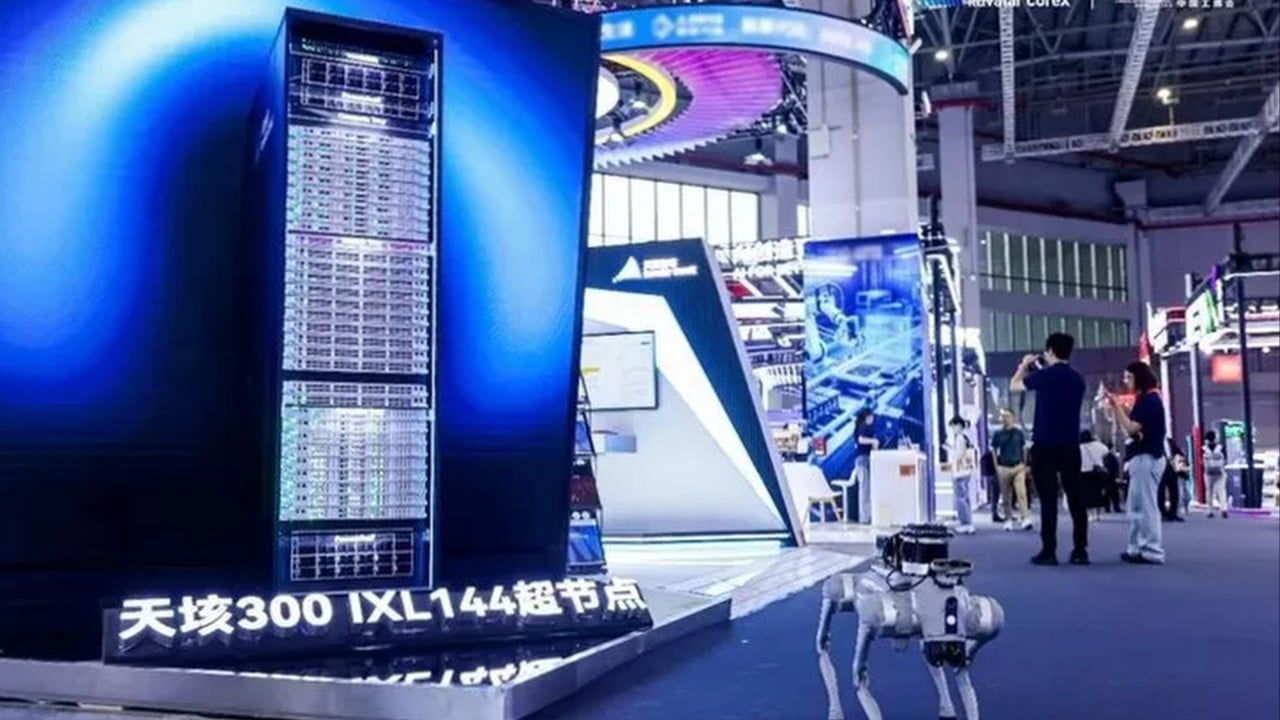
China’s Iluvatar CoreX’s first AI computing supernode squeezes most GPUs in 1 system

FIS Launches Agentic AI Tool for CFOs to Spot Cash Flow Risks Earlier
Mainland Chinese traders boost Hong Kong stock buying for fourth month as AI bets surge