Beijing seeks tighter grip on AI exports amid US rivalry
China has proposed export controls on 23 AI technologies, including models and computing clusters, to manage transfers it deems critical for national security and geopolitical competition. The proposals, announced Friday, cover overseas deployment of restricted AI models but exclude access via APIs, websites, apps, and software-as-a-service platforms, according to China's commerce ministry.
The proposed controls aim to allow Chinese AI developers, such as DeepSeek and Alibaba, to continue expanding internationally while providing Beijing greater oversight of sensitive AI technology transfers. By exempting access through application programming interfaces (APIs), websites, apps, and software-as-a-service platforms, the framework differentiates between direct technology transfers and service consumption.
A stated intention behind these controls is to prevent the misuse of AI technologies. This includes systems capable of autonomously generating and modifying malicious software that could pose threats to critical infrastructure and national security. The concern follows observations of frontier models, like Anthropic's Mythos, which have highlighted AI's potential to enhance cyberattacks.
These proposals are part of a broader revision of China's technology export catalogue, covering 40 technologies across AI, biotechnology, and solar power. While most AI technologies are expected to remain freely exportable, the new rules will require exporters to register certain overseas technology transfers from Friday, pending final rules after public consultation closes on November 15.
Share this article
Related reading
6 stories
China moves to curb tech exports, including AI, citing national security risks
This earlier report detailed China's initial moves to curb tech exports, including AI, citing national security risks.
Alibaba to embed AI throughout Taobao, Tmall merchant operations in 2027: executive
Alibaba, a key player mentioned, is actively embedding AI into its operations, highlighting the technology's strategic importance.
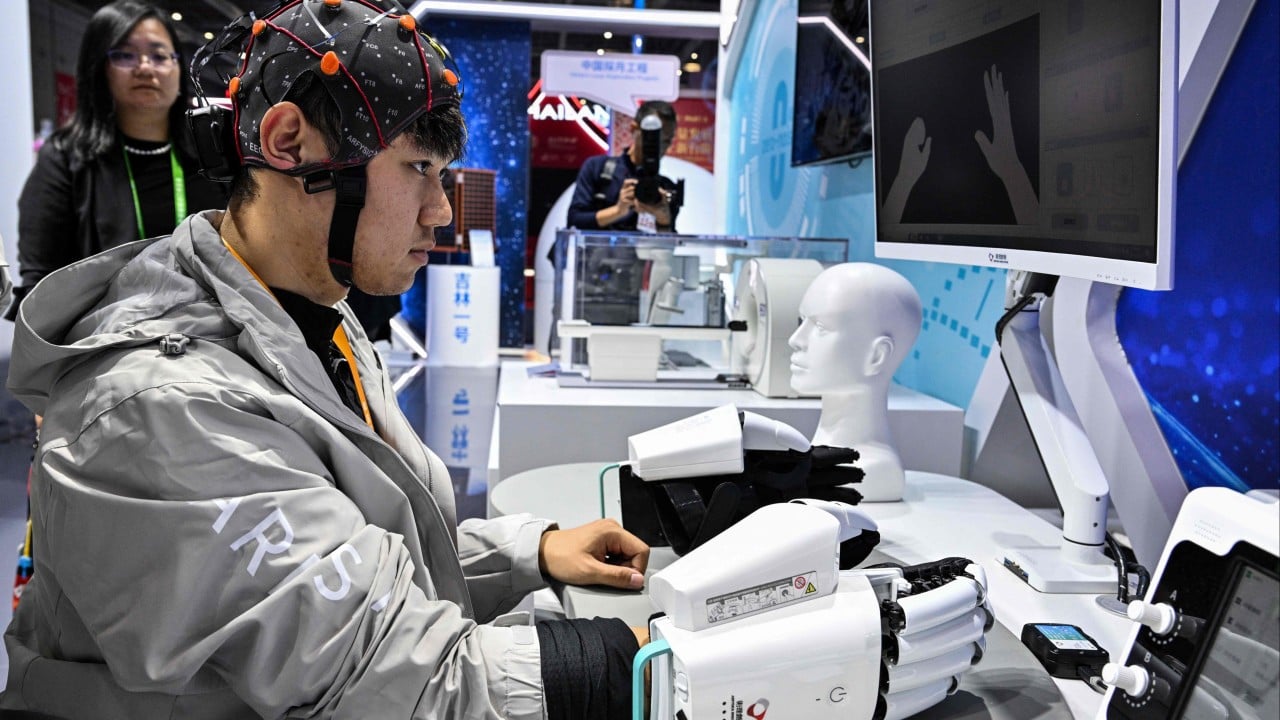
China moves to set global standards for brain-computer interface technology

Standard Chartered Signs Deal to Acquire Zodia Custody

Allianz Singapore Offers Up to S$50 for Haze-Related Medical Treatment