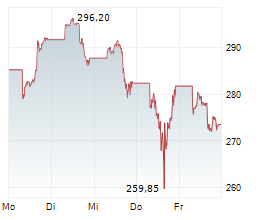
Another Indian to head Adobe: Are they better at running Big Tech?
Anil Chakravarthy is set to become the next CEO of Adobe, succeeding Shantanu Narayen. Chakravarthy, an Indian-origin executive, joined Adobe in 2020 and previously led the Digital Experience business. This transition marks a notable succession where one Indian-origin leader passes the helm to another, particularly as artificial intelligence reshapes Adobe's core business model. Chakravarthy's background includes a PhD from MIT and leadership roles at Informatica, VeriSign, and Symantec, fitting a pattern seen among many Indian-origin CEOs in American technology. His appointment underscores a broader trend of Indian-origin executives holding significant leadership positions across major US tech companies, including Google, Microsoft, and IBM.
The appointment of Anil Chakravarthy as Adobe's new CEO reflects a deeper trend beyond individual success stories: a generation of technically trained Indian professionals now occupy critical leadership roles across American technology. This extends beyond the well-known CEOs like Sundar Pichai and Satya Nadella to include executives in engineering, product, finance, and operations at companies such as Tesla, Apple, YouTube, and Cisco. This pipeline of talent, often with strong academic backgrounds from institutions like IIT and MIT, is increasingly seen as well-suited to managing complex organizations through periods of rapid technological change, such as the current AI transformation affecting Adobe. The prevalence of Indian-origin executives in these roles suggests a robust and established professional network and a consistent leadership development path within US tech. A 2025 Newsweek analysis, using ghSMART data, indicated that executives of Indian descent were significantly more likely to take calculated risks and embrace challenges, traits valuable in navigating disruptive shifts like those posed by AI. For Asia, this trend highlights the continued influence of its talent pool on global tech leadership. It also points to the potential for stronger linkages and knowledge exchange between Silicon Valley and Asian tech hubs, as these leaders often maintain connections to their home regions. The challenge for Asian markets is to cultivate similar leadership pipelines domestically that can scale to global influence.
Related reading
6 stories
People’s Daily rejects US claims of malicious AI distillation, warns of countermeasures

Databricks to Invest Over US$350 Million in Singapore, Double Its Workforce

Personetics Launches AI Banking Console for Relationship Managers

Anthropic Sets October Launch for Singapore Office With Local Hiring Planned
Huawei unveils new optical tech standard in challenge to Nvidia, Broadcom