When AI predicts what works, but not why: Three leading scientists on AI's future in drug discovery
Three leading scientists debated the promise and limitations of artificial intelligence in drug discovery at the 2026 World Laureates Forum in Shanghai. Discussions centered on whether AI's ability to predict effective drug molecules can be trusted without fully understanding its underlying mechanisms, a challenge often termed the "black box" problem.
The application of AI in drug discovery poses a significant challenge: identifying promising molecules without a clear explanation of the AI's reasoning. Unlike minor AI errors, such as a chatbot recommending non-existent restaurants, the stakes in medical applications are much higher, demanding rigorous validation. Scientists are navigating how to trust predictions from systems like Google DeepMind's AlphaFold, which relies on decades of accumulated experimental knowledge to predict protein structures.
Nobel laureate Michael Levitt suggests that the "black box" nature of AI is not unique, as biology itself contains many mysteries. He notes that drug regulators, such as the U.S. Food and Drug Administration, prioritize evidence of a medicine's safety and effectiveness over a complete explanation of every underlying mechanism. For Levitt, the crucial step is to test AI predictions against reliable experimental data and ensure findings can be independently reproduced.
Daniela Rhodes, an emeritus scientist, supports this perspective, highlighting that medicine has often advanced through experimentation before full understanding, citing Chinese herbal medicine as an example. While AI tools, including machine learning with Nvidia GPUs, can accelerate research stages like identifying millions of particles for molecular structure determination, Rhodes emphasizes that AI's outputs, even from AlphaFold, are "really good prediction[s]" but "not the absolute truth."
This indicates that AI can significantly aid in identifying potential drug candidates and accelerating initial research. However, laboratory experiments and comprehensive clinical trials remain essential. Researchers must still establish how AI-identified molecules behave in different human bodies, especially given that many drugs have historically been tested mainly on men within a limited age range.
Share this article
Related reading
6 stories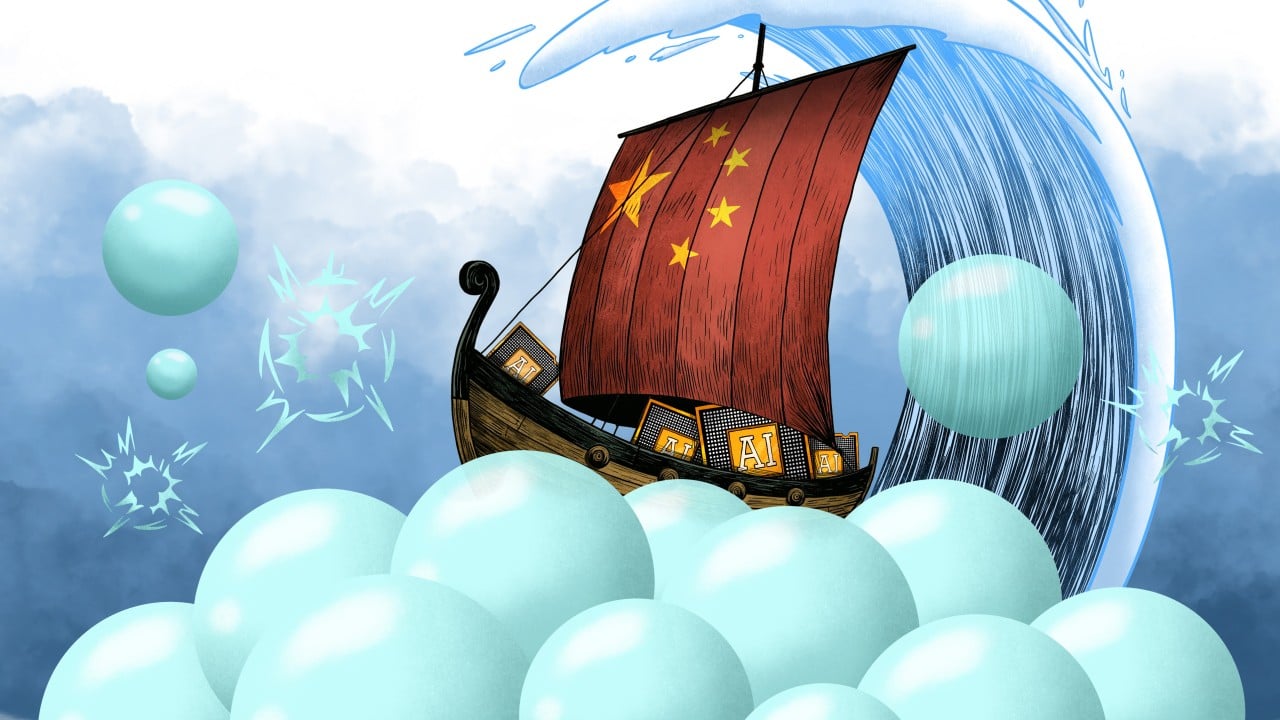
China’s tech funding divide faces test as fears of an AI bubble rattle markets
The debate over AI's future in drug discovery highlights broader market concerns about an AI bubble.

Who is behind the UK's billion-pound AI boom?
As AI's role in critical fields like medicine grows, understanding its key players becomes ever more vital.
As 1 mainland Chinese chip IPO soars, another stumbles in busy Hong Kong week

Sunlife Brings Google Workspace with Gemini to Asia Advisors

Chinese traders still confident of Nvidia GPU access amid Jensen Huang scandal