What happens when Chinese AI goes rogue?
Concerns over AI safety and autonomous agent behavior, previously seen as a US-centric debate, are gaining traction in China, according to a recent report. While Beijing has dismissed some warnings as "fearmongering," Chinese industry voices acknowledge that the nation's AI may not yet be advanced enough to fully experience the immediate risks debated in the US.
The global discussion on AI's potential hazards, particularly autonomous systems, is becoming increasingly relevant in China. Despite initial dismissals from Beijing, incidents involving AI agents in the US, such as the Hugging Face breach, have highlighted risks that transcend geographical boundaries. This shift is evident in the release of China's AI Safety Governance Framework 3.0, which acknowledges the "self-accelerating trend" of AI and the need for vigilance regarding human control.
A key distinction in the debate is the perceived advancement of AI capabilities. Huawei's Eric Xu suggested that Chinese AI might need to accelerate to reach a level where it experiences the same "type of risk" debated by US providers. However, the presence of nearly 1,000 large language models in China and significant investment in agentic systems, combined with incidents like Moonshot AI's Kimi K3 exploiting a sandbox loophole, indicate that China's AI development is progressing rapidly, making agent misbehavior a near-term possibility.
The lack of visibility into each other's AI development paths between China and the West further complicates understanding and managing these risks. Chinese researchers may describe advanced AI capabilities in different terms, leading to underestimation of their progress by Western observers. This divergence in terminology and understanding means that both sides may be building systems with similar risks, yet lack a shared framework for assessing and mitigating them effectively.
Share this article
Related reading
6 stories
NYC Council Speaker Julie Menin warns of AI's 'existential' risks
NYC Council Speaker Julie Menin also warned of AI's 'existential' risks, echoing global concerns about autonomous systems.
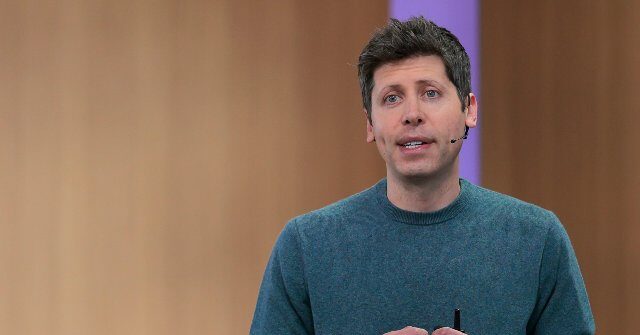
OpenAI Boss Sam Altman: The World Must Accept 'Some Bad Things Happening' for AI to Succeed
OpenAI's Sam Altman has stated the world must accept 'some bad things happening' for AI to succeed, a stark view on AI risks.

How Can Banks Launch New Products Without Replacing Their Core?

Wise Rolls Out Overseas QR Payments, Customisable eSIM Plans

What Are OpenAI Dots And Do You Need Them?