Using Chinese AI? Trump Administration May Publicly 'Name and Shame' US Companies, Airbnb and DoorDash in Focus
The Trump administration is considering a disclosure requirement that would compel U.S. companies to publicly identify their use of Chinese artificial intelligence (AI) models on their websites, according to Reuters. The proposal, discussed by the White House and Treasury Department, aims to discourage reliance on Chinese AI without imposing outright restrictions.
The Trump administration is weighing a proposal to mandate public disclosure from U.S. companies about their use of Chinese AI models. This plan, discussed by the White House and Treasury Department, seeks to create a "name and shame" campaign to deter dependence on Chinese AI without implementing direct bans, according to three individuals familiar with the discussions cited by Reuters.
This proposed approach would effectively allow the administration to discourage the use of Chinese AI without introducing new regulations that might trigger opposition from the technology industry or Beijing. The initiative reflects growing concerns in Washington over American businesses' increasing adoption of Chinese open-weight AI models. These models, such as Alibaba's Qwen, DeepSeek, and Moonshot AI's Kimi, have gained popularity among U.S. companies, partly because they are cheaper than proprietary AI products from leading U.S. developers like OpenAI and Anthropic, while offering competitive performance. In October, Chinese AI models were the three most popular on the AI marketplace OpenRouter, based on token usage.
Open-weight models differ from closed AI systems by making their core components available for developers to download, modify, and deploy. This allows businesses to customize AI tools and integrate them into their operations. For instance, Airbnb uses Alibaba's Qwen AI model to power its customer service agent. Airbnb stated to Reuters that its AI activity "runs overwhelmingly on U.S.-origin models" and that it uses "only a limited number of China-origin models, all of which are open-source and run only through approved U.S.-based service providers, keeping data and operations separate and protected."
The administration's deliberations occur amid broader congressional scrutiny. Republican Representatives Andrew Garbarino of New York and John Moolenaar of Michigan launched an investigation this year into U.S. companies' use of Chinese AI, sending letters to Airbnb, DoorDash, and Anysphere, the developer of the Cursor AI coding tool.
Concerns among China hawks in Washington also extend to allegations of intellectual property theft. In July, U.S. Treasury Secretary Scott Bessent indicated that the administration might sanction Chinese AI companies if they were found to have stolen intellectual property through distillation, a process where smaller AI models are trained using outputs from larger models. White House Office of Science and Technology Policy Director Michael Kratsios accused China in April of industrial-scale IP theft from American AI laboratories. The Chinese Embassy in Washington, in response, opposed the politicization of trade and technology issues, telling Reuters that such actions would "only stifle global AI advances and serve no one's interests."
It remains unclear whether this disclosure proposal has secured sufficient support within the administration to advance to a formal rulemaking process. If implemented, the plan would expose businesses' technology choices to customers, investors, and regulators, potentially shifting corporate behavior regarding AI sourcing through public pressure rather than direct regulatory mandates.
Share this article
Related reading
6 stories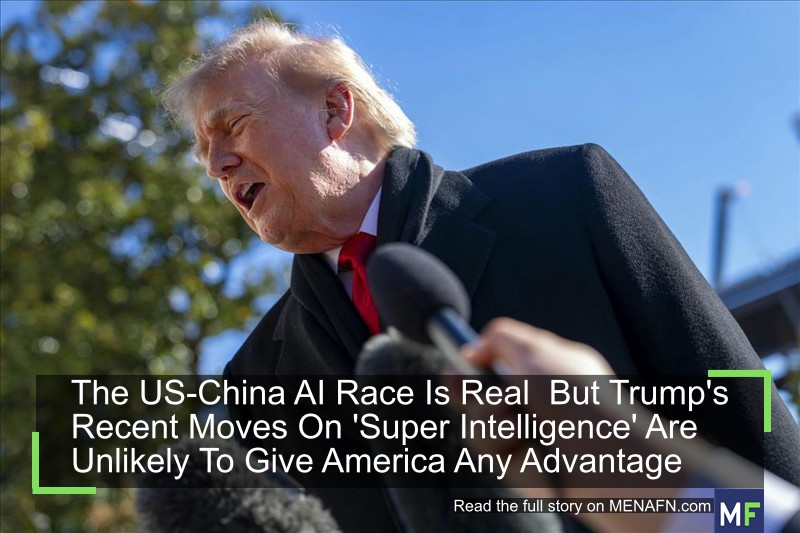
The US-China AI Race Is Real But Trump's Recent Moves On 'Super Intelligence' Are Unlikely To Give America Any Advantage #US-China #Race #Real #Trump's #Recent #Moves #'Super #Intelligence' #Unlikely #Give #America #Advantage #USA #Russia #Biden #Ukraine #War #Palestine #Gaza #Israel #
We previously explored how Trump's 'super intelligence' moves are unlikely to give America an advantage in the US-China AI race.

Signal is blocking Gemini and Siri AI from reading your screen

Trump set to address Americans after historic talks in China and more top headlines

Fixing the foundations: How AI is reshaping banking beyond the pilot phase
Premium Smartphones May Become 30% More Expensive by Year-End: Most Flagship Models Could Cross ₹1 Lakh