US tightens AI chip export curbs to close China’s overseas data centre loophole
The US Bureau of Industry and Security (BIS) has announced new restrictions aimed at preventing Chinese companies from accessing advanced US artificial intelligence chips through overseas data centres. This move targets what BIS identified as a significant loophole, which previously enabled Chinese developers to gain computing power otherwise prohibited by existing US export controls.
The US Bureau of Industry and Security (BIS) has implemented new restrictions designed to limit how Chinese companies can access advanced US artificial intelligence chips. These measures specifically target the practice of Chinese developers gaining remote computing power through data centres located outside of China.
This action by BIS directly addresses what has been described as a major loophole in existing US export controls. Previously, Chinese developers could bypass direct export restrictions by remotely accessing advanced US AI chips hosted in data centres located in other countries.
These new restrictions aim to extend the reach of US export controls, encompassing indirect methods of technology access. This indicates a strategic effort to more comprehensively limit China's ability to leverage critical AI computing power, even when the chips themselves are not physically located within China.
The announcement from BIS highlights a continued focus on controlling the flow of advanced semiconductor technology crucial for AI development. While the specific details of these new restrictions and their enforcement mechanisms were not provided, the move signals an evolving approach to managing technology access.
Share this article
Related reading
6 stories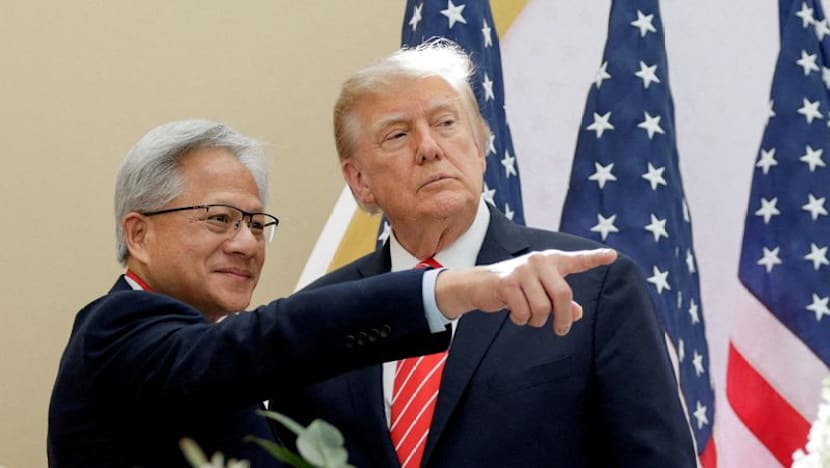
Commentary: Jensen Huang’s downfall will accelerate US-China ‘great decoupling’
Our commentary explored how US-China tech tensions, like these chip curbs, accelerate a 'great decoupling'.

Superhuman pushes its Go assistant everywhere

After Jensen Huang’s exit, Nvidia speeds up pay reviews. Will it help retain staff?
Stuck in the Pile: Why India's answer sheets need an AI rescue

Anthropic's historic debut to put AI's promise and peril on Wall St trial