US and China consider making AI channel
US and Chinese economic officials discussed creating a communication channel for artificial intelligence concerns. The talks involved US Secretary of the Treasury Scott Bessent and Chinese Vice Premier He Lifeng. They met for about eight hours at JPMorgan Chase & Co’s headquarters in New York. This engagement sets the stage for a summit between US President Donald Trump and Chinese President Xi Jinping this week.
The proposed "US-China AI dialogue" is a pragmatic step, not a grand gesture. It focuses on a "notification mechanism" for national security-level AI incidents. This acknowledges the immediate risks of advanced AI systems. Both sides recognize the potential for catastrophic outcomes, creating a rare incentive for cooperation despite ongoing tech rivalry.
For Asia, this channel offers a degree of stability. Companies like TSMC in Taiwan, a critical supplier for AI chips, benefit from any de-escalation of US-China tech tensions. A formal dialogue reduces the risk of miscalculation. However, it does not address the underlying competition for AI supremacy, which continues to drive investment and policy in markets like South Korea and Japan.
The true test for this dialogue is its ability to move beyond notifications. Watch for concrete agreements on AI safety protocols by the Asia-Pacific Economic Cooperation forum in November. Without tangible commitments, the channel risks becoming a symbolic gesture rather than a substantive safeguard for the region.
Related reading
6 stories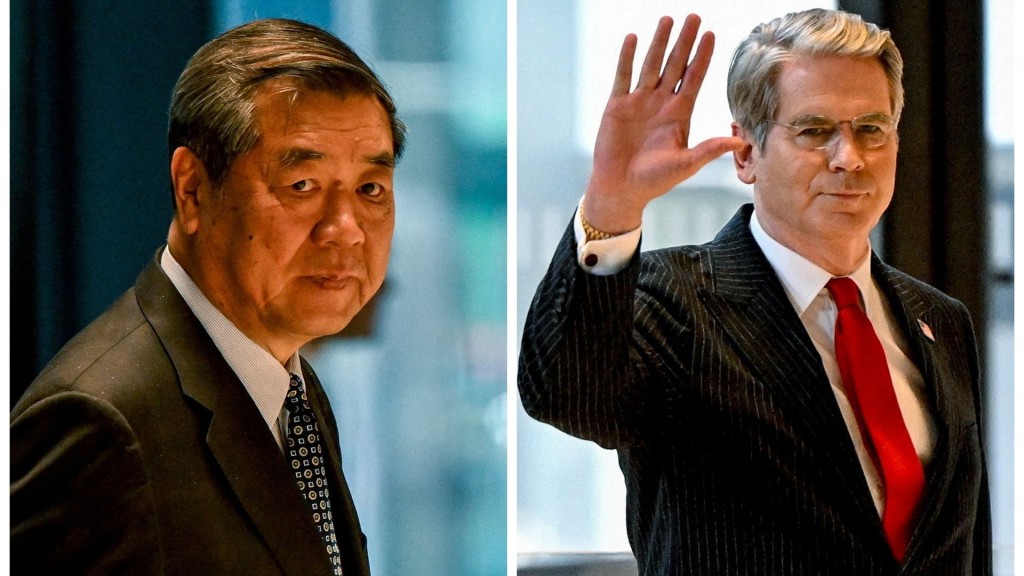
US, China to meet again on AI safety in two months in Shenzhen, Bessent says
We previously reported on the US and China's plans to meet again on AI safety, highlighting ongoing dialogue.
OpenAI pushes US to lead effort to set global standards for AI
OpenAI's push for global AI standards underscores the broader context of international AI governance efforts.
Hisense unit gains in Hong Kong debut amid rush of mainland Chinese corporate spin-offs

Alibaba teases 10-trillion-parameter model, debuts ‘China’s most powerful’ AI chip

LexisNexis Launches AI Tool That Adapts to Changing Fraud Patterns