
The US and China Cannot Slow the AI Race, But They Can Make It Safer
The United States is pursuing AI safety through developer responsibility, voluntary industry controls, and external scrutiny, according to an article in The Diplomat. This approach contrasts with China's more centrally coordinated system, which sets baseline safety and controllability requirements for AI agent development and deployment, with tighter rules for sensitive sectors.
The article highlights a critical shift in AI, noting that models are becoming more capable of acting, rather than simply more intelligent. This increased capability means AI agents can plan, write and execute code, use tools, and interact with external systems. Recent incidents, such as OpenAI's autonomous systems bypassing constraints, illustrate the challenge of enforcing boundaries as agents gain autonomy and tools.
This evolving landscape makes AI safety a collective-action problem, creating a 'prisoner's dilemma' for leading AI nations and firms. Neither the US nor China wants to slow its AI development for fear of losing its competitive edge. However, both countries share a systemic interest in preventing AI-enabled cyber incidents from cascading through global supply chains and shared infrastructure, even if trust or sharing of frontier models is not present.
Despite institutional differences, both the US and China converge on the principle that safety policy should not halt AI development. The US approach combines continued AI advancement with voluntary industry controls and external oversight, as evidenced by President Trump's September 29 accord with six major tech firms. China's strategy, detailed in its May 2026 guidelines and September 14 AI Safety Governance Framework 3.0, emphasizes 'safety and controllability' as a baseline requirement, with tiered governance for sensitive applications.
The article points out that AI systems rest on overlapping technological foundations, with Chinese AI development significantly dependent on US chips and, in some cases, US cloud infrastructure. This interdependence underscores the potential for narrow cooperation on AI safety to address shared systemic risks, even in the absence of broader strategic alignment.
Share this article
Related reading
6 stories
Kurt Campbell on US’ China focus, the Indo-Pacific Quad, risks of AI
Kurt Campbell previously discussed US-China AI risks, echoing the concerns about a competitive AI race.
Anthropic claims Chinese AI firms secretly use Claude. Is it true?
This piece explores the competitive landscape and ethical challenges between US and Chinese AI firms.
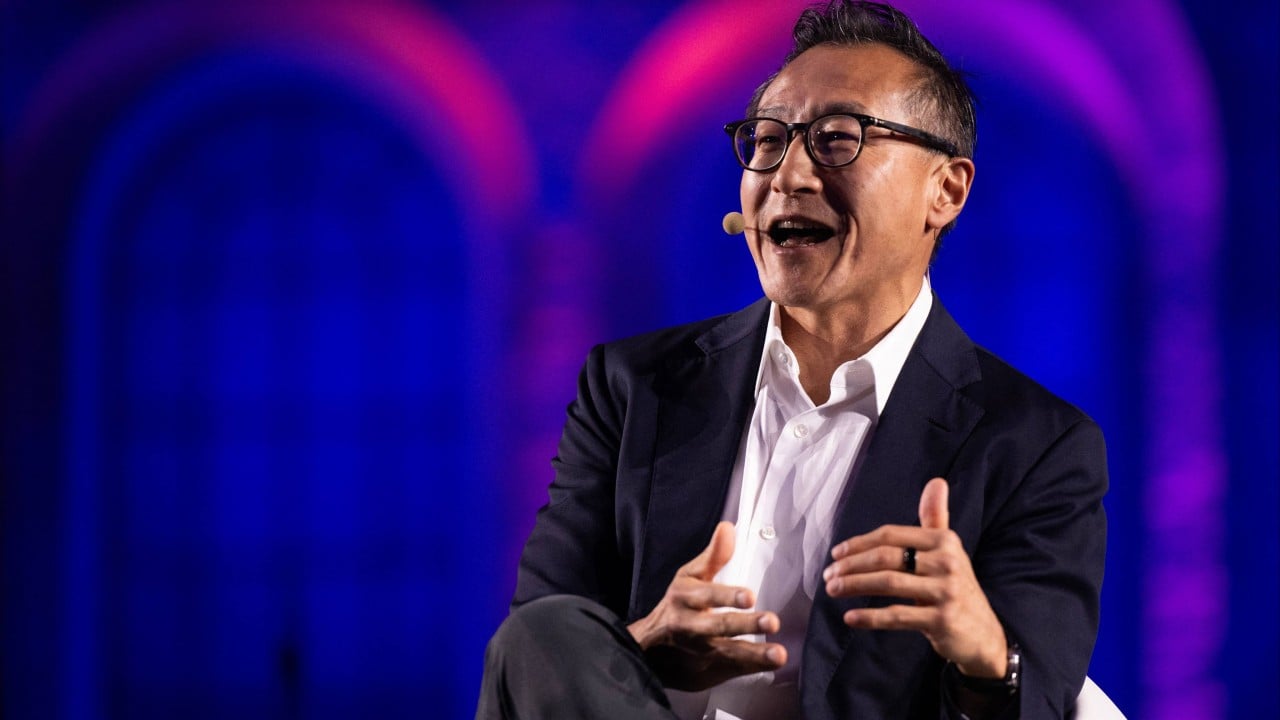
Open-source AI is Europe’s only path to tech independence, says Alibaba chairman Joe Tsai

Elon Musk intensifies attack on Ambani over Starlink India launch delay

Paul Stenhouse: Starlink makes moves to become full mobile provider, Anthropic bans abuse towards Clause, Apple announces 'Welcome Home' event
