The true scandal of the Nvidia saga
The US government, under President Donald Trump, implemented policies to take a direct financial cut from Nvidia Corp's advanced AI chip sales to China, according to reports. This included a 15 percent commission on certain AI chips starting August last year, escalating to 25 percent on H200 sales by December the same year, applied through tariffs on chips re-exported from Taiwan.
Recent scrutiny on Nvidia Corp has focused on alleged personal and financial ties between former CEO Jensen Huang and US President Donald Trump’s administration, reportedly influencing sales of advanced semiconductors to China. These connections raised questions about their potential impact on US national security interests, particularly concerning China’s artificial intelligence ambitions.
Reports detailed that the family and former investment firm of US Secretary of Commerce Howard Lutnick, who reportedly intervened to facilitate Nvidia chip exports against the views of some Trump officials, were heavily invested in Nvidia and related Southeast Asian data centers. Former CEO Huang also maintained a close relationship with Trump, who reportedly acquired Nvidia stock a week before export rules on H200 chips were loosened. By the end of August, Trump's Nvidia stake may have exceeded US$60 million.
While the full extent of these reported connections is not yet clear, the situations highlight potential conflicts of interest. Government regulators are expected to be neutral arbiters, but personal and financial relationships with a firm like Nvidia could create biases that alter their determinations. Influence can flow both ways: executives may lobby for state favors, while officials might push firms for personal or political reasons.
A less-discussed aspect of the Nvidia situation is the US government’s direct financial involvement in Nvidia’s China business. In August last year, President Trump announced that Nvidia and AMD would pay the government 15 percent of sales for certain AI chips to China, an arrangement Trump stated was his idea. This was followed in December the same year by an announcement of a 25 percent cut of Nvidia’s H200 sales to China.
To implement this 25 percent cut while navigating a constitutional ban on export taxes, the government issued a January proclamation. This measure imposed a 25 percent tariff on chips imported from Taiwan and then re-exported to China. Through September this year, this scheme is estimated to have generated as much as US$333 million for the US government.
The core problem, according to the reporting, is that this arrangement adds inappropriate weight to one side of the regulatory scale. Regulators tasked with deciding whether an overseas chip sale threatens national security are also authorized to collect a commission on it, making impartiality difficult. This policy issue extends beyond Nvidia and the specific export licensing scheme. The Cato Institute’s government ownership dashboard showed that since June last year, the US government has initialed equity stake deals with 41 companies, 27 of which were seeded by the US Department of Commerce. At least two of these deals reportedly involve firms tied to the Trump administration.
Share this article
Related reading
6 stories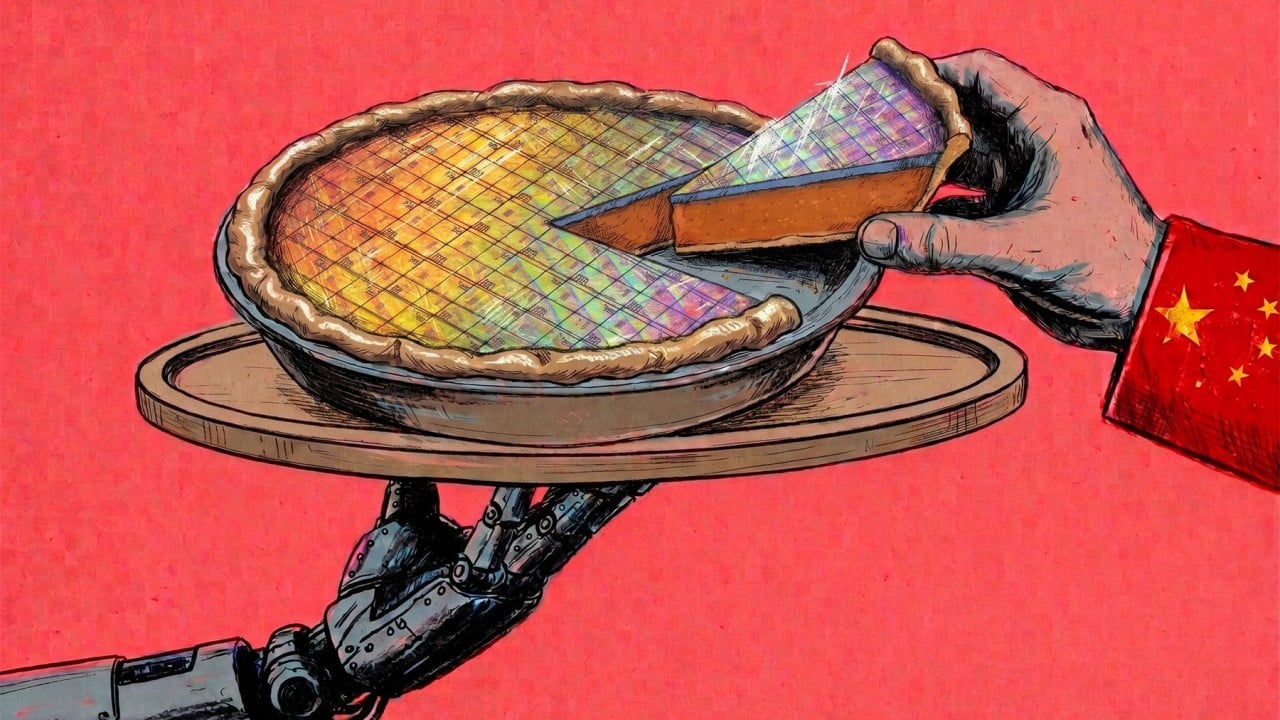
China’s memory chipmakers are catching up to industry leaders. What happens when they do?
We previously explored China’s memory chipmakers catching up, a key part of the broader semiconductor landscape.
New 19-month low: Hong Kong stocks plunge as AI sell-off spreads to Asia

US detains Chinese Princeton student; China’s space mining road map: 5 weekend reads you missed

Wise Offers Up to S$40 Cashback on Overseas Card, QR Payments

Standardizing AI Tool Integration with Model Context Protocol (MCP)