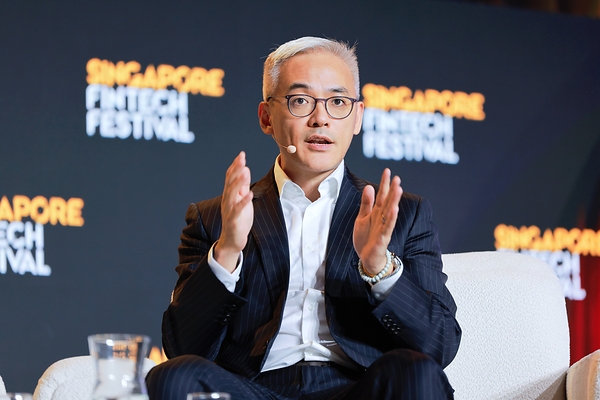
Korea, Philippines Agree to Expand Shipbuilding, AI, Nuclear Cooperation
On the 16th, Korean President Lee Jae-myung and Philippine President Ferdinand Romualdez Marcos Jr. met in Manila, agreeing to expand cooperation in areas including artificial intelligence, nuclear power, and space. The leaders signed two accords, one enhancing legal stability for Korea International Cooperation Agency operations and another for science and technology collaboration in areas like smart agriculture.
President Lee Jae-myung of Korea and President Ferdinand Romualdez Marcos Jr. of the Philippines met on the 16th in Manila during the ASEAN summit. This marked their third meeting, following an APEC summit in Gyeongju last year and a state visit to the Philippines in March. The discussions focused on expanding cooperation across several sectors, including shipbuilding, artificial intelligence, nuclear power, space, and disaster safety. They also committed to deepening existing collaboration in defense and infrastructure.
During the summit, the leaders noted that trade between the two countries reached $21.3 billion through September, surpassing the previous annual record. This follows Korea's participation in the Luzon Economic Corridor as a partner country in May. President Lee also thanked the Philippine government for its cooperation on a criminal extradition request made during their March summit and asked for continued support for Korean companies expanding their presence in the country.
The meeting concluded with the signing of two documents that aim to give concrete shape to the strategic partnership. The first was a supplementary arrangement to the framework agreement on grant aid. This accord is intended to enhance the legal stability for the operations of the Korea International Cooperation Agency's (KOICA) Philippines office, providing a clearer operational framework for aid delivery.
The second document signed was a memorandum of understanding on strengthening science and technology cooperation. This agreement specifically targets expanding collaboration in fields such as smart agriculture. While the agreement establishes a mechanism for practical cooperation, the full scope, potential funding, or specific timelines for initiatives in AI or nuclear power were not detailed in the reporting. Both leaders expressed an intent to continue producing tangible results through close communication between relevant agencies on both sides.
Share this article
Related reading
6 stories
Superhuman pushes its Go assistant everywhere
Stuck in the Pile: Why India's answer sheets need an AI rescue

Anthropic's historic debut to put AI's promise and peril on Wall St trial
The US-China AI Race Is Real But Trump's Recent Moves On 'Super Intelligence' Are Unlikely To Give America Any Advantage #US-China #Race #Real #Trump's #Recent #Moves #'Super #Intelligence' #Unlikely #Give #America #Advantage #USA #Russia #Biden #Ukraine #War #Palestine #Gaza #Israel #

BlackLine partners with OpenAI to bring AI agents to finance teams