Korea emerges as new outlet for China's excess EV capacity
Chinese automakers BYD, Zeekr, and XPeng are expanding passenger vehicle operations in Korea, driven by domestic overcapacity and European trade barriers. This strategic shift involves hiring Korean executives and building local infrastructure, moving beyond their prior focus on commercial vehicle exports.
Chinese electric vehicle (EV) manufacturers BYD, Zeekr, and XPeng are significantly increasing their presence in Korea. This expansion is a direct response to mounting EV overcapacity within China, intense domestic price competition, and more stringent trade barriers in Europe, compelling these automakers to seek alternative growth markets abroad.
The companies are changing their approach to the Korean market. Previously, their engagement was largely centered on exporting finished commercial vehicles, particularly electric buses, with local operations focused on sales and import. The new strategy involves strengthening local infrastructure for passenger vehicles and recruiting Korean executives with experience from established foreign automakers.
For example, BYD Korea, which initiated its passenger vehicle business early in 2025, appointed Cho In-chul, formerly a head of Mini Korea's passenger vehicle division, to lead its new operations. This localized leadership aims to better navigate the Korean market and compete directly with established brands. BYD Korea registered 21,731 new vehicles from January to October 2026, positioning it fourth among imported auto brands in cumulative sales for that period, behind Tesla, BMW, and Mercedes-Benz.
Zeekr Korea has taken a similar step by appointing Lim Hyun-ki, a former Audi Korea CEO, as its new chief. XPeng also brought on Lee Man-sik, a former Volvo executive, to head its Korean operations. These appointments suggest a move to build the necessary local expertise and infrastructure to support a larger volume of passenger vehicles.
Initial market penetration efforts are underway. Zeekr's midsize electric SUV, the 7X, surpassed 1,500 preorders within approximately three months of opening preorders in June 2026, with customer deliveries commencing in October 2026. While these strategic hires and initial sales figures indicate a more permanent market commitment, challenges persist for Chinese brands. These include establishing brand recognition, improving resale values, developing comprehensive after-sales service, and addressing consumer concerns regarding data security.
Share this article
Related reading
6 stories
Superhuman pushes its Go assistant everywhere
Stuck in the Pile: Why India's answer sheets need an AI rescue

Anthropic's historic debut to put AI's promise and peril on Wall St trial
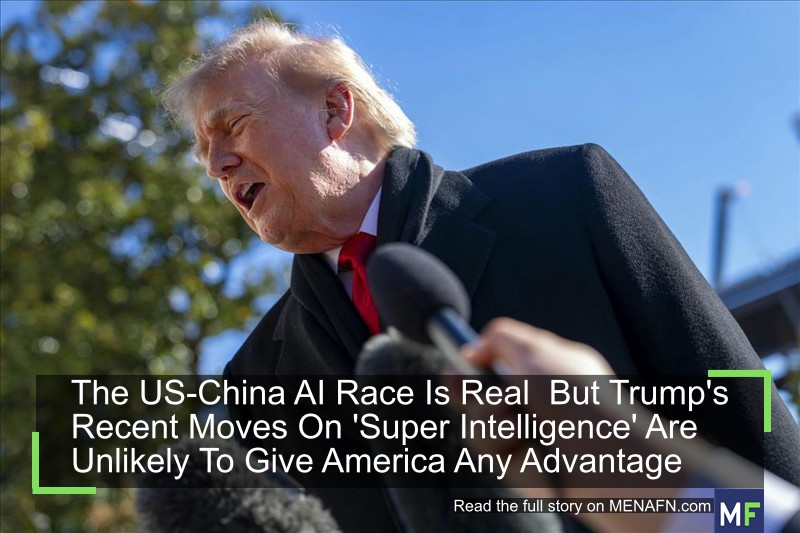
The US-China AI Race Is Real But Trump's Recent Moves On 'Super Intelligence' Are Unlikely To Give America Any Advantage #US-China #Race #Real #Trump's #Recent #Moves #'Super #Intelligence' #Unlikely #Give #America #Advantage #USA #Russia #Biden #Ukraine #War #Palestine #Gaza #Israel #

BlackLine partners with OpenAI to bring AI agents to finance teams