I run a 2B vision model on my phone and stopped sending my screenshots to ChatGPT and Claude
The common practice of uploading screenshots to cloud-based AI models for analysis exposes personal data to provider retention policies, potentially for years. An individual user has transitioned to processing screenshots with local AI models like Qwen 3.5 2B and Gemma 4 E2B on their phone, a shift that gained popularity around 2025-2026, to mitigate these privacy risks.
Users frequently upload screenshots to cloud-based AI models, including Gemini, for convenient image analysis. However, this workflow subjects the uploaded content to the data retention and training policies of AI providers. For instance, OpenAI may use consumer plan chats to improve models unless users opt out, while Anthropic can retain chats for up to five years if model training is enabled. This means sensitive information captured in screenshots, ranging from group chat content to financial details, work documents, boarding passes, or health results, could be stored on external servers.
The concern stems from the advanced capabilities of AI vision models, which can effectively extract detailed text from images, including names on notification banners. Consequently, sending a screenshot to a chatbot is akin to pasting all its visible content into the chat, regardless of whether the user consciously noted every detail. This poses a privacy risk, particularly for data involving other individuals or sensitive personal information, which many organizations restrict from being shared with consumer AI applications.
Around 2025-2026, local AI models gained traction as an alternative, enabling users to process images directly on their own devices. This method significantly reduces uploads to third-party servers, offering greater control over personal data. While local applications may still incorporate telemetry, optional cloud synchronization, or require remote services, the primary advantage is the reduced reliance on external data transfers for core processing.
One user has adopted local models for mobile screenshot analysis, utilizing applications like Noema, which offers features comparable to cloud AI mobile apps, including web and image upload. For Android users, Google AI Edge Gallery is also recommended. The user employs Qwen 3.5 2B, a compressed 4-bit model, for tasks requiring reasoning and mathematical operations, noting its proficiency in reading text from images given its size. This model handles all serious images.
For more creative screenshot workflows, such as generating design ideas or inspiration, the user turns to Gemma 4 E2B, which they have used in PocketPal and now in Edge Gallery due to its additional features. The choice between Qwen and Gemma is based on the specific use case, with Qwen described for analytical tasks and Gemma for creative ones. Within Noema, the user maintains a context of approximately 16k tokens and keeps Web, Memory, and Search My Chats functionalities enabled.
This shift towards on-device processing demonstrates a user-driven approach to manage data privacy. By choosing local models and applications, individuals can mitigate the risks associated with third-party data retention policies for sensitive personal and shared information, asserting more direct control over their digital content.
Share this article
Related reading
6 stories
As agentic AI seeps into finance, concerns grow over new risks and blind spots
As AI models become more personal, our past coverage explored the growing risks and blind spots of agentic AI.

Superhuman pushes its Go assistant everywhere
Stuck in the Pile: Why India's answer sheets need an AI rescue
Anthropic's historic debut to put AI's promise and peril on Wall St trial
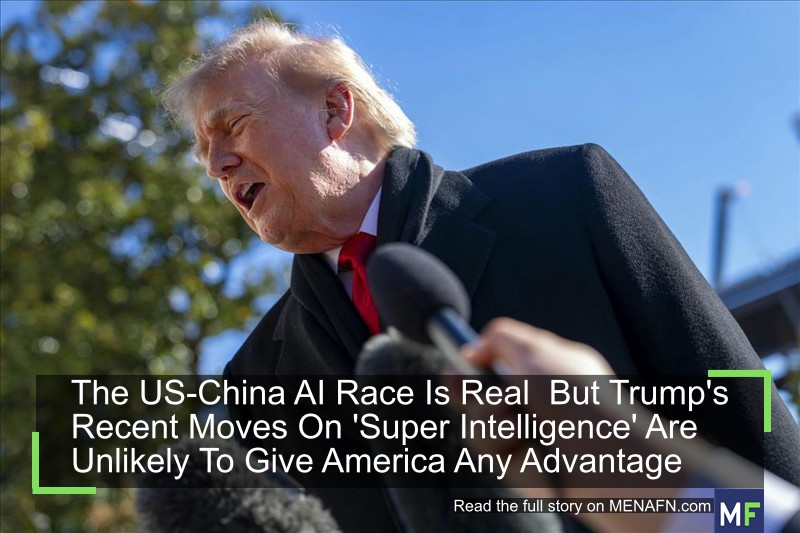
The US-China AI Race Is Real But Trump's Recent Moves On 'Super Intelligence' Are Unlikely To Give America Any Advantage #US-China #Race #Real #Trump's #Recent #Moves #'Super #Intelligence' #Unlikely #Give #America #Advantage #USA #Russia #Biden #Ukraine #War #Palestine #Gaza #Israel #