Google launches Gemini 4 Neon with Carbon quality at Flash speeds, live for AI Pro
Google has launched Gemini 4 Neon, its latest AI model, following the recent introduction of Carbon and Hydrogen. The company states Neon offers "frontier-level reasoning" for complex, high-frequency tasks, aiming for faster and more cost-efficient performance. It is now available to AI Pro and AI Ultra subscribers.
Google introduced Gemini 4 Neon, its latest AI model, which the company states is designed for "complex, high-frequency workflows" requiring "frontier-level reasoning." This release follows last week’s launches of Gemini 4 Carbon and Hydrogen, expanding the Gemini 4 family.
Neon reportedly offers performance comparable to, or even surpassing, Carbon for tasks involving coding, reasoning, and agentic functions. Google emphasizes that Neon achieves this at "Flash speeds" and a lower cost. The model is accessible to subscribers of the Gemini app for AI Pro and AI Ultra, replacing the earlier 3.1 Pro and Argon models. Additionally, 3.5 Flash-Lite is now designated as "Auto" in the model selector for paid users.
Similar to Hydrogen, Neon features a 1 million-token context window and four "thinking levels": Low, Medium, High, and Extra High. Google positions Neon between Hydrogen, which handles fast everyday execution, and Carbon, which is built for "hardest, long-horizon projects." Neon is explicitly designed for "complex coding, analytical reasoning, and production-grade enterprise workflows," aiming to balance depth with efficiency.
Neon is currently priced at $3 per 1 million input tokens and $15 per 1 million output tokens. Promotional pricing for Argon and Carbon, set at $2 per 1 million input and $10 per 1 million output, will end on November 30. After this date, their prices will increase to $4 per 1 million input and $20 per 1 million output. This adjustment means Neon will become 25% cheaper than Argon and Carbon after November 30, suggesting a shift in Google's cost-performance strategy for these models.
The rapid succession of new models, including Argon, Hydrogen, Carbon, and Neon, has led to some user confusion regarding which model is best suited for particular tasks. The source notes that differentiating between the various models can be challenging for users in applications like Antigravity, highlighting the potential for complexity in model selection.
Share this article
Related reading
6 stories
NETS Explores a Way for AI Agents to Pay at Singapore Shops
As Google launches new AI models, NETS is exploring how AI agents could facilitate payments in Singapore.

MAS Chief Warns Against Giving AI Agents Your Bank Login

Five Banks Bid Over S$200 Million for Tokenised MAS Bills
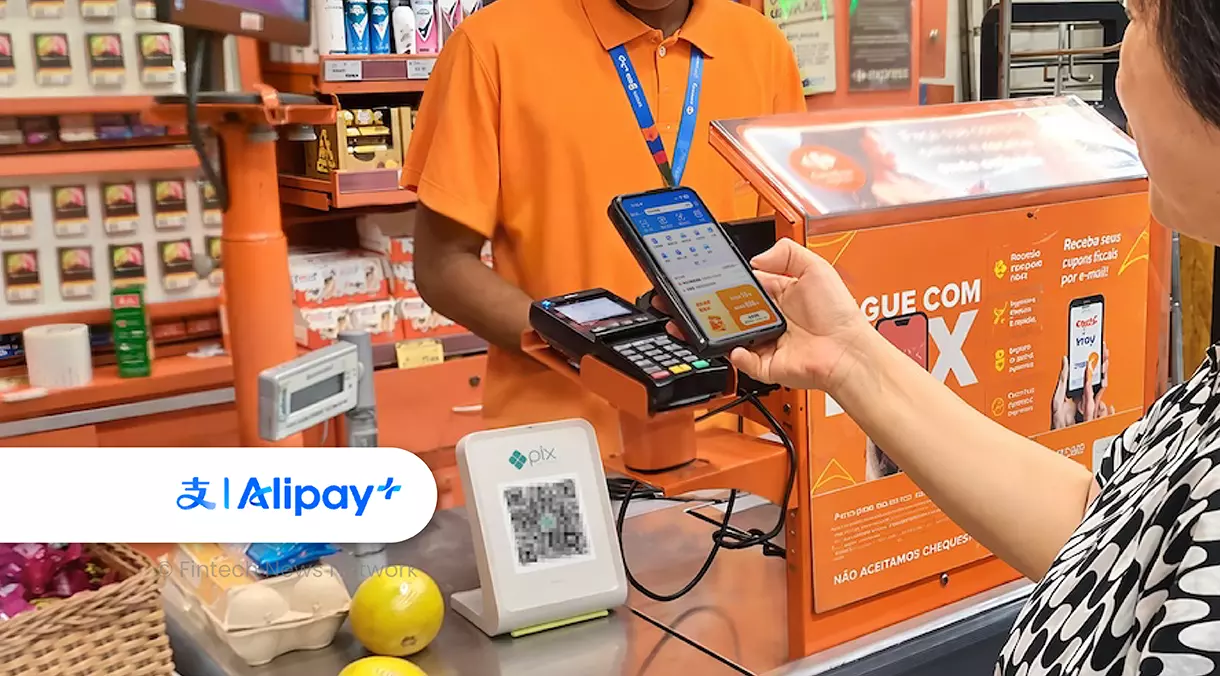
Alipay+ Connects to Brazil’s Pix for Cross-Border QR Payments

Meet the 10 Women Leaders Putting AI to Work in Finance and Beyond