Dubai Future Week showcases AI governance experiences from UAE, Malaysia, Rwanda
Dubai Future Week 2026 hosted a joint discussion on 19th November, 2026, where experts from the Centres for the Fourth Industrial Revolution in the UAE, Malaysia, and Rwanda explored their distinct experiences in developing advanced AI ecosystems. The session highlighted a shift towards responsible AI deployment for economic and societal impact, drawing on a joint report that identifies three distinct pathways to AI maturity.
At Dubai Future Week 2026 on 19th November, 2026, experts from the Centres for the Fourth Industrial Revolution (C4IR) in the UAE, Malaysia, and Rwanda convened to discuss their approaches to building AI ecosystems. The core of their discussion centered on a fundamental shift in the global AI conversation: moving from who develops the fastest technology to who can deploy these technologies responsibly for economic and societal impact. Their insights were drawn from a collaborative report, 'AI in practice: Highlights from UAE, Malaysia, and Rwanda', which outlines three distinct pathways to AI maturity.
The UAE's strategy, termed a 'Living Lab' model, focuses on rapid experimentation and institutional leadership. This approach integrates emerging technologies into government operations, positioning the country to use AI as a tool for economic diversification and enhancing public services. The UAE Centre for the Fourth Industrial Revolution, established in 2019 through a collaboration between the UAE government and the World Economic Forum, oversees efforts to examine transformations and promote responsible technology use.
Malaysia presented a different perspective, prioritizing people and inclusion in its digital transformation efforts. An example discussed was ILMUchat, a Malaysian AI assistant built around a locally developed multimodal language model. This platform is designed to understand the Malay language, regional dialects, and cultural nuances, attracting over 10,000 users during its pilot phase. This demonstrates an effort to make AI solutions accessible and responsive to local linguistic and cultural diversity.
Rwanda demonstrated a policy- and development-driven approach, aligning AI with national priorities such as healthcare, agriculture, and education. The report highlighted an AI-powered agricultural advisory platform that delivers voice-based guidance to farmers in local languages through basic mobile phones. This extends access to rural communities without smartphones or reliable internet connectivity. Following a successful pilot in four regions, the initiative aims to reach one million farmers over the next three years, with support from the Bill & Melinda Gates Foundation.
Speakers concluded that successful AI adoption does not rely on a single, universal model. Instead, it depends on governance frameworks tailored to the specific priorities and development needs of individual societies. While the UAE exemplifies rapid innovation and institutional leadership, Malaysia underscores human-centered inclusion, and Rwanda showcases how public policy can transform technology into a development tool. The shared message was that AI's success should be measured by its ability to deliver meaningful and sustainable improvements in people's lives, beyond just algorithmic capabilities.
Share this article
Related reading
6 stories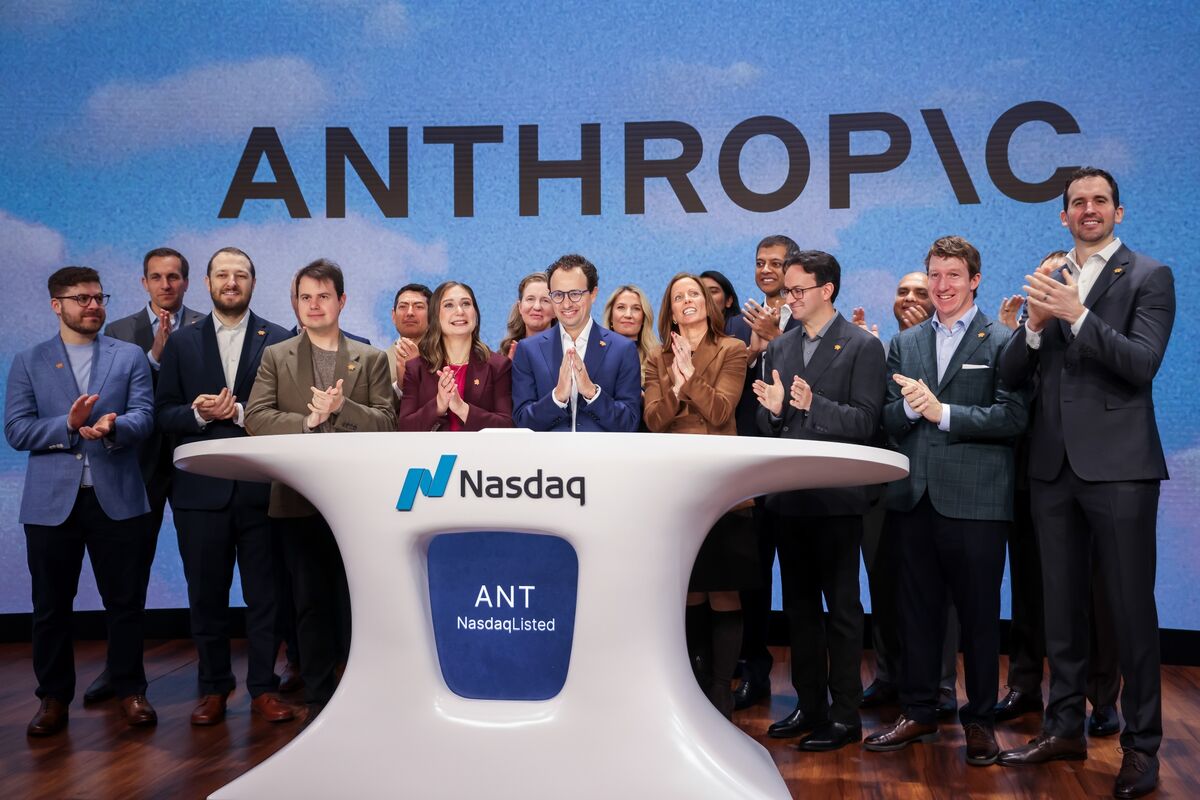
Anthropic IPO Gives the AI Trade a New Main Character
This article explores the rise of Anthropic, a key player in the responsible AI development space.

Anthropic’s I.P.O. Turns Tech Researchers Into Overnight Millionaires
We previously covered Anthropic's IPO, highlighting the financial impact of AI research and development.

Signal is blocking Gemini and Siri AI from reading your screen

Trump set to address Americans after historic talks in China and more top headlines

Fixing the foundations: How AI is reshaping banking beyond the pilot phase