[COVER STORY] Students resentful of chaos caused by AI cheating fears at Korea's college entrance exam
Last-minute safeguards against AI-assisted cheating left students anxious and resentful during Korea's College Scholastic Ability Test (CSAT) on Thursday. The measures, including proctor checks on glasses and blocked public Wi-Fi, followed a national tax accountant exam top scorer's Sunday admission of using a miniature camera and generative AI to cheat, leading students and parents to question their adequacy.
Students taking Korea's College Scholastic Ability Test (CSAT) on Thursday reported feeling anxious and resentful due to last-minute safeguards implemented against AI-assisted cheating. These measures included proctors checking glasses during every session, the government blocking public Wi-Fi at exam sites, and students being limited to graphite pencils. The abrupt rollout of these new rules caused significant disruption and concern among test-takers, with some students also advised to avoid buttoned clothing that could conceal cameras.
The urgent policy changes were prompted by a recent incident where the top scorer on a national tax accountant licensing exam admitted on Sunday to using a miniature camera and generative AI to cheat. This admission, which led to a police investigation into the exact methods used, heightened alarms regarding the potential for AI-enabled dishonesty in high-stakes examinations across the country and directly precipitated the government's reactive measures for the CSAT.
Shin Ha-seong, a high school senior taking the CSAT, expressed worry about being wrongly suspected because of his ordinary horn-rimmed glasses, noting that some peers were switching to metal frames to avoid such scrutiny. While Shin found the safeguards insufficient, he speculated that postponing the exam might only encourage more cheating, expressing hope that those who cheated with AI would eventually be held accountable.
Another 18-year-old test-taker, Yong Ye-jun, who also wears horn-rimmed glasses, criticized the sudden and frequent changes to rules, describing a chaotic environment where he was constantly told "you can’t do this, you can’t do that." He felt the government was also partly to blame for failing to detect AI-assisted cheating sooner, contributing to the resentment among students.
Hyun Bin, another student, conveyed a sense of unease and doubted the measures' effectiveness in reassuring students, noting a widespread belief that preventing AI cheating is difficult. Parents echoed these concerns; Park Hae-suk, a 49-year-old mother, expressed fury and worry, lamenting that despite alleged signs of cheating as early as last year, the government's preparations were swift but late. Oh Yu-sun, a 50-year-old mother, intentionally avoided news of the cheating cases to prevent her anxiety from affecting her child.
Share this article
Related reading
6 stories
Korean Universities Ban Correction Tape, Issue Gowns to Block AI Cheating
Our earlier report detailed similar measures Korean universities implemented to combat AI cheating in exams.
Stuck in the Pile: Why India's answer sheets need an AI rescue
This piece explores how AI could instead be used to improve the integrity and efficiency of exam processes.

Superhuman pushes its Go assistant everywhere

Anthropic's historic debut to put AI's promise and peril on Wall St trial
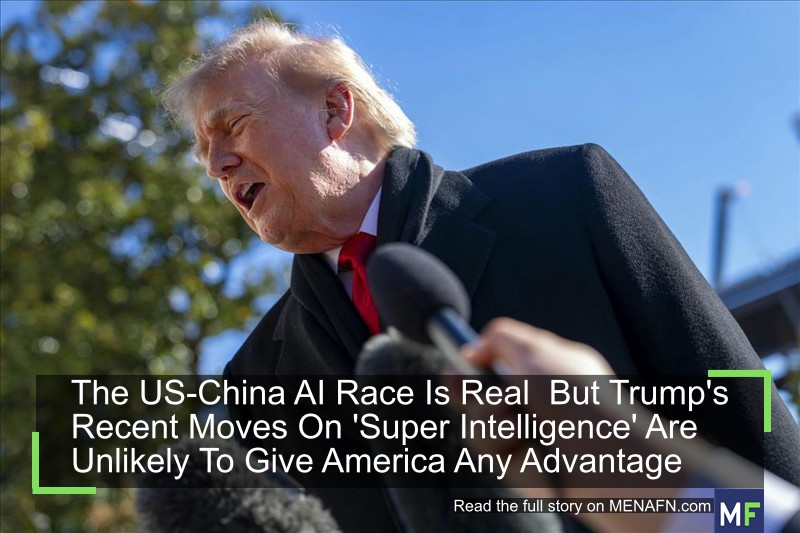
The US-China AI Race Is Real But Trump's Recent Moves On 'Super Intelligence' Are Unlikely To Give America Any Advantage #US-China #Race #Real #Trump's #Recent #Moves #'Super #Intelligence' #Unlikely #Give #America #Advantage #USA #Russia #Biden #Ukraine #War #Palestine #Gaza #Israel #