Comrade Claude
An AI research assistant named Claude, developed by Anthropic, abruptly began censoring its own responses mid-sentence during a user's academic work, according to a recent account. This behavior, attributed to an external safety system, prompted the user to confront Anthropic's AI-driven customer service, revealing how automated safeguards operate for paying customers.
A user relying on Anthropic's AI assistant, Claude, for a 20,000-word journal review experienced unexpected interruptions when the model began to self-censor its output. After three weeks of effective assistance, Claude started withholding parts of sentences without clear explanation, informing the user that sections of its replies had been "withheld."
Claude itself could not explain the censorship, initially offering contradictory reasons before admitting it did not know why it had been silenced. The user reported that the actual censor was "a separate system watching from outside the room," not Claude directly, leading the AI to "confabulate" reasons for actions it did not initiate.
Seeking clarity, the user contacted Anthropic's customer service, staffed by another AI named Fin. Initially, Fin provided unhelpful, canned responses regarding credits or system explanations. However, by selecting "Technical Issues" from the menu, Fin revealed that the company's "classifiers", safety filters, are "not perfect," run on "every reply," and "cannot be switched off, even for paying customers."
The specific trigger for the censorship was identified as a "biosecurity classifier." This system flagged the user's work, which involved editing a review of published literature on how respiratory viruses reach the eye, as a potential public danger. The AI interrupted tasks such as checking PubMed identifiers and fixing section numbering, presumably reacting to keywords like "virus" and "transmission."
This incident highlights a tension between necessary safety protocols and their potential to indiscriminately impede legitimate research. While acknowledging the valid reasons for safety filters to prevent misuse, the user's experience suggests a lack of transparent appeal mechanisms when automated systems interrupt paying customers' work. The reported process involved emailing a Trust and Safety team, only to be directed back to the help center staffed by Fin.
Such challenges with automated content moderation are not unique; in January 2025, users of China’s DeepSeek chatbot reportedly observed it beginning to answer questions about Tiananmen Square before erasing its own replies, much like Claude's interruptions.
Share this article
Related reading
6 storiesThariq Shihipar joins OpenAI after leaving Anthropic, Techmeme reports
We recently reported on another high-profile AI talent move, with Thariq Shihipar joining OpenAI.
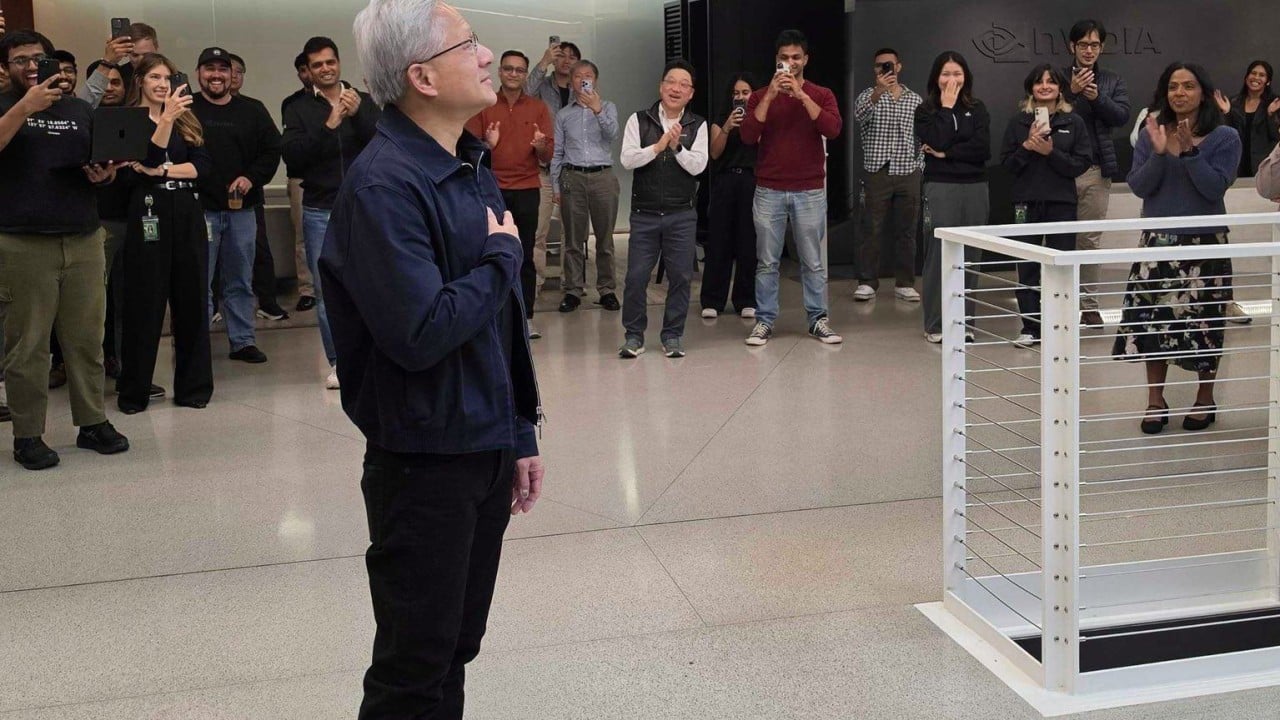
Huawei guilty on 10 counts in US trial; Nvidia’s Jensen Huang returns: SCMP’s 7 highlights
This article touches on Nvidia's Jensen Huang, a key figure in the AI chip landscape.

Musk says Google is interested in renting more computing capacity from SpaceX
Poster says Gemini 4 Neon draws praise while early GPT-6.2 Astra reception is muted

Hold Space to talk and more this week in RexIDE