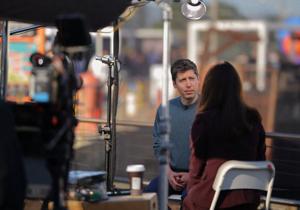
AI has the power to realign politics
The US is experiencing a significant political divide over the development of artificial intelligence, with some industry leaders and political figures urging a slower pace while others, including President Donald Trump, advocate for rapid advancement. This tension is reportedly creating a new fault line in US politics, potentially leading to a "white-collar revolution."
The article outlines a fundamental conflict regarding AI's trajectory: a call for caution from some AI builders and religious leaders like Pope Leo XIV, contrasted with a push for accelerated development by President Trump and Nvidia CEO Jensen Huang. This tension reflects a societal debate over the speed at which AI should integrate into human systems.
This divergence is presented as a potential catalyst for political realignment in the US, drawing parallels to historical shifts driven by issues like slavery or civil rights. The article suggests AI could instigate a "white-collar revolution," as advanced systems challenge knowledge-based professions, mirroring the economic disruption experienced by blue-collar workers during globalization.
The emerging political split sees the Republican president favoring industry self-regulation and rapid progress, while leading Democrats, including former President Barack Obama and California Governor Gavin Newsom, advocate for public controls and a more measured approach. This partisan divide underscores the challenge for voters in determining the future direction of AI policy.
Share this article
Related reading
6 stories
What happens when Chinese AI goes rogue?
The political and societal implications of AI going rogue are explored in this related piece.
Australia as an AI Middle Power – The Diplomat
Australia's strategic positioning as an AI middle power offers another perspective on AI's global impact.

Sri Lanka’s Union Bank Upgrades Legacy Credit Card System With BPC
Huawei, Qualcomm strike multi-year patent agreement across 5G, AI

A Chatbot Almost Started a War With China. The Scariest Part Wasn’t the AI’s Mistake