
Taiwan should diversify: US academic
A US academic has urged Taiwan to diversify its economy beyond semiconductors and allocate resources to other industries. Glenn D. Tiffert of Stanford University’s Hoover Institution stated that while the chip industry has been beneficial, Taiwan risks over-reliance, similar to Detroit’s past dependence on automobiles. He suggested that government policy could foster growth in robotics and biotechnology. Tiffert also advocated for expanding chip production with trusted overseas partners, citing TSMC’s Arizona operations as a model for distributing manufacturing without diminishing Taiwan’s global position. This approach aims to build supply chain resilience among allies, ensuring redundant capacity against disruptions.
Taiwan's reliance on semiconductors presents a demographic challenge, as the industry's expansion outpaces the supply of engineers. This dynamic points to a need for government policy to actively diversify the economy, creating space for emerging sectors like robotics and biotechnology. Glenn D. Tiffert’s remarks at the DSET and SEMI forum in Taipei underscore that while chip manufacturing is vital, a singular focus could leave Taiwan vulnerable. Distributing semiconductor production to trusted overseas partners, such as TSMC’s Arizona fabs, strengthens Taiwan by enhancing global supply chain resilience. This strategy allows allies to maintain some domestic capacity while specializing in their strongest areas, rather than attempting full decoupling. Emiko Higashi of Kioxia Holdings Corp also noted that government subsidies alone cannot sustain chip projects, emphasizing the need for companies like Rapidus Corp to achieve viability through collaboration, such as its 2-nanometer technology partnership with IBM Corp. The thing to watch is how Taiwan balances its commitment to the semiconductor industry with concrete steps towards economic diversification. The success of distributed manufacturing models, exemplified by TSMC’s profitable Arizona operations, suggests a path forward that enhances both national and allied security without diminishing Taiwan’s core strengths.
相關文章
6 則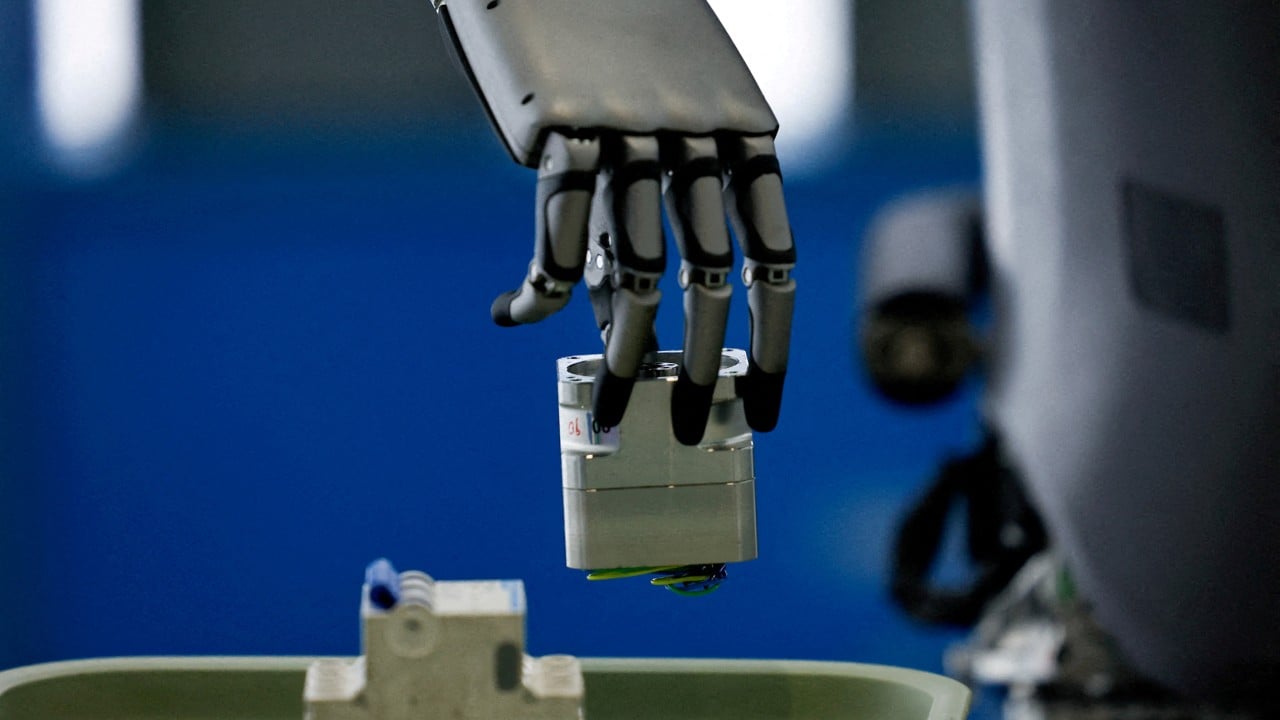
China’s robot revolution may not arrive in the way you expect
We explored China's robot revolution, a key diversification area for Taiwan, and how it might unfold differently.

How China Works author on the data economy, robots and AI
The author of How China Works discusses the data economy, robots, and AI, all vital for Taiwan's diversification.
《人民日報》駁斥美國惡意AI蒸餾指控,警告將採取反制措施

Databricks 將在新加坡投資逾 3.5 億美元,員工人數翻倍

Personetics 推出適用於客戶關係經理的 AI 銀行控制台
