
Law&Company Launches Legal AI Covering Nine Asian Jurisdictions
Law&Company, a South Korean legal technology firm, has launched Lexpand AI, a global legal AI service supporting nine Asian jurisdictions in eight languages. The platform operates on the same engine as the company's domestic SuperLawyer service and targets the Asia-Pacific legal services market, valued at approximately 500 trillion won in 2024. Lexpand AI offers legal research, document drafting, analysis, and query functions, with a focus on data security through Amazon Web Services. The company will showcase the service at Singapore's TechLawFest and plans to expand sales and partnerships across major Asian markets, including Japan.
Law&Company's Lexpand AI launch is a significant move for South Korean legal tech into the broader Asian market, covering nine jurisdictions and eight languages. The platform's "one platform, multiple jurisdictions" strategy, combining commercial large language models with local legal data, addresses a fragmented but growing regional demand. By allowing users to select language and jurisdiction independently, such as handling Singaporean legal work in Korean, Lexpand AI aims to bridge a critical gap in cross-border legal practice. The service's reliance on retrieval-augmented generation (RAG) and a fact-checking process, with hyperlinks to source data, is crucial for building trust in legal AI where accuracy is paramount. However, the initial focus on securing actual users and integrating local feedback will be key. The challenge for Law&Company will be to adapt its SuperLawyer engine to the diverse legal nuances and data availability across markets like Japan and Indonesia, where legal frameworks can vary significantly.
分享這篇文章
相關文章
6 則
How China Works author on the data economy, robots and AI
Our interview with the author of How China Works explored the broader implications of AI and the data economy.

美國抑或中國?哈薩克發展人工智能拒絕選邊站

LUXEED 與 Aimoga 機器人:透過互聯的人車家生態系統共同建構未來出行
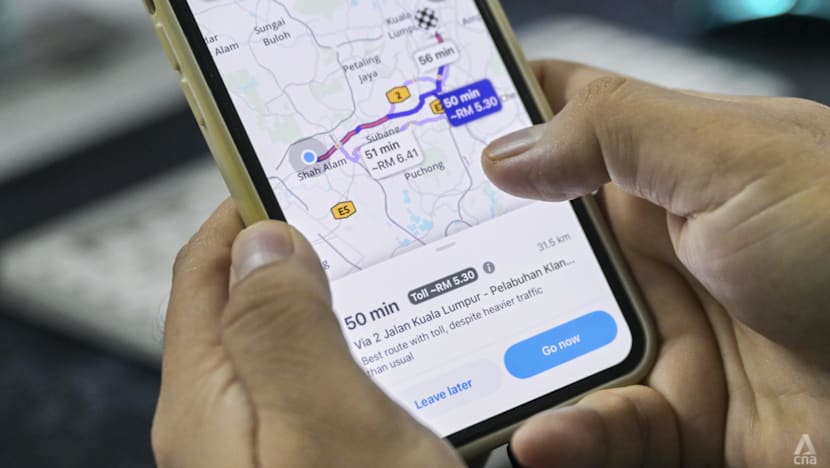
馬來西亞希望擺脫Waze。司機們會轉用嗎?

Stripe 發票不等於收入:如何透過網絡掛鈎將其轉化為 ASC 606 附表
