
Japan is sending a spacecraft to land on Phobos, where gravity is about 1,700 times weaker than Earth’s. MMX will collect more than 10 grams of material and return it to Australia in 2031 — the first sample ever deliberately brought back to Earth from the Martian system.
Japan is embarking on an ambitious space mission to Phobos, one of Mars' moons, with its MMX spacecraft. The mission aims to land on Phobos, where gravity is significantly weaker than Earth's, to collect more than 10 grams of surface material. This material will then be transported back to Australia in 2031, marking the first time samples from the Martian system have been deliberately returned to Earth. The MMX mission will utilize a rover and two distinct sampling systems to achieve its scientific objectives, providing unprecedented insights into the Martian environment and the formation of its moons. This endeavor represents a significant leap in planetary exploration and international scientific collaboration.
Japan's MMX mission to Phobos underscores the growing prominence of Asian nations in advanced space exploration, a field increasingly intertwined with technological innovation. This mission, focused on sample return from the Martian system, highlights the sophisticated engineering and scientific capabilities being developed within Asia. Such endeavors drive advancements in robotics, materials science, AI for autonomous operations, and data analytics, all of which have direct applications in terrestrial tech sectors.
The successful execution of missions like MMX not only elevates Japan's standing in the global space race but also stimulates a broader ecosystem of startups and research institutions across Asia. The technological spin-offs from space exploration—ranging from advanced sensors to AI-driven navigation and communication systems—can find applications in diverse industries like smart manufacturing, logistics, and environmental monitoring. Furthermore, the international collaboration aspect, with sample return to Australia, signals a trend towards global partnerships in high-stakes scientific ventures, positioning Asia as a key player in shaping future space and tech frontiers.
相关文章
6 则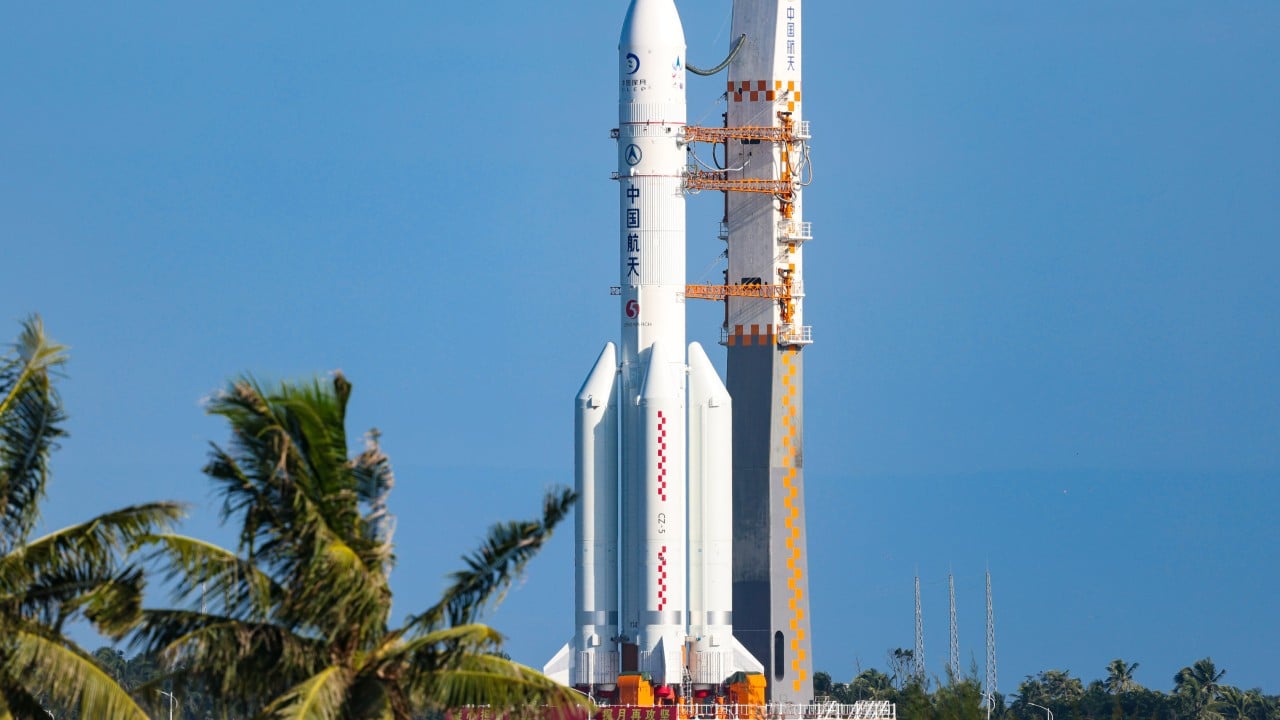
Moon mission delay a hiccup, but Chinese rocket city Wenchang remains on the march
China's own space ambitions, including its rocket city Wenchang, show Asia's growing role in space.

中国火箭热潮将海南变成太空枢纽。发射能否推动更广泛的增长?

Anthropic 将 Claude 聊天和 Cowork 合并到单一界面

Threads 新功能让播客推广节目并触达听众

中国 Z.ai 获注资 50 亿美元后,收入目标上调 25%
