Chinese military’s AI attack chain lags foreign models: researchers
A recent study by Chinese researchers indicates that China's military AI models are less advanced than foreign equivalents. The paper, published in July in the journal Defence Industry Conversion in China, found that the People's Liberation Army (PLA) primarily uses AI for support functions like intelligent question-answering and content generation. Offensive combat applications of AI remain in an exploratory stage, with limited theoretical and empirical research. This assessment comes from researchers affiliated with the Armed Police Force Shandong Corps and the Engineering University of People’s Armed Police. The findings highlight a performance gap in military AI as the US and China increasingly view AI as a core component of strategic competition.
Chinese military AI models are lagging behind foreign counterparts, focusing mainly on auxiliary functions rather than direct combat applications. A July paper from researchers at the Armed Police Force Shandong Corps and the Engineering University of People’s Armed Police noted that offensive AI uses are still exploratory, with a significant performance gap compared to international large language models. This suggests that while China is investing in military AI, its practical combat integration is not as advanced as some external analyses might assume. For Asia, this points to a more nuanced reality in the regional military AI race. While China is a major player, its current capabilities in this specific domain are internally assessed as trailing. The focus on support functions could allow for rapid improvements in operational efficiency, but the slower development in offensive AI suggests a longer runway before these systems become a decisive factor in direct military engagements across the Indo-Pacific. The key thing to watch is how quickly China can bridge this reported performance gap in offensive AI applications.
相关文章
6 则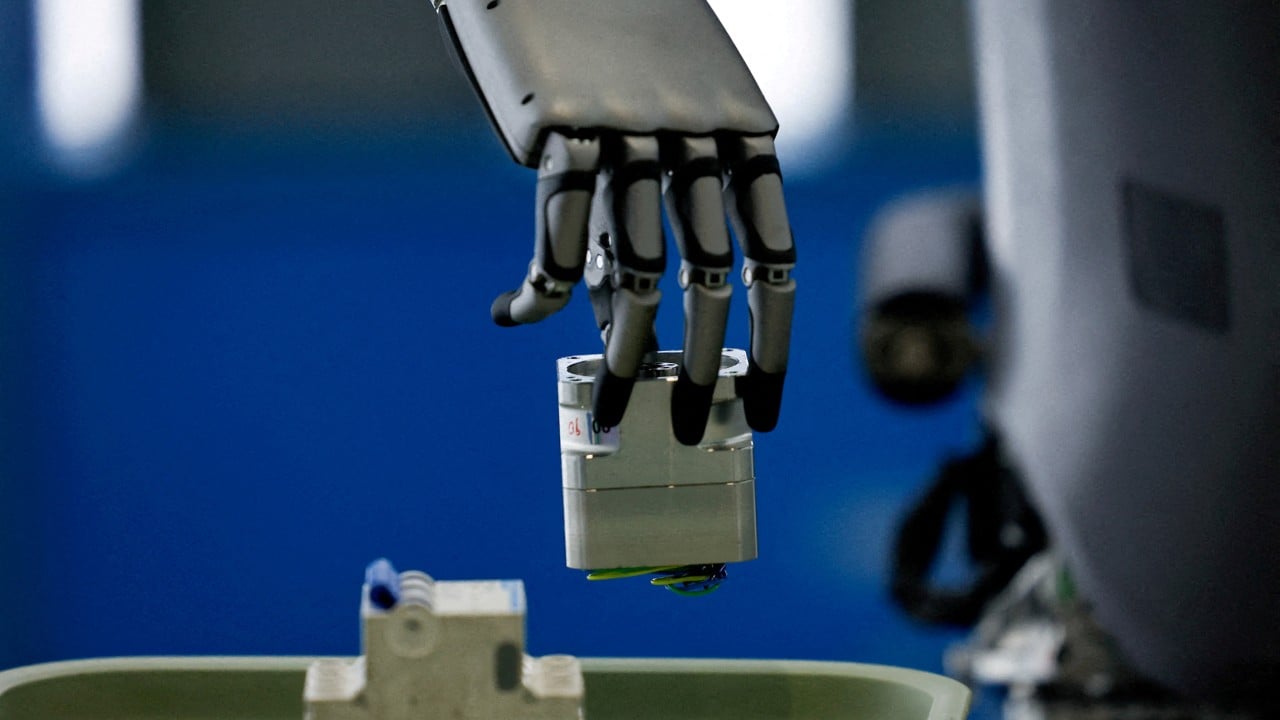
China’s robot revolution may not arrive in the way you expect
Our earlier reporting explored how China's AI revolution might unfold differently than many expect.
曾依赖三星和SK海力士,中国智能手机制造商转向长鑫存储

商汤科学家称多模态人工智能突破有望在两年内实现

星展银行在新加坡结算系统推出前扩展黄金存储设施

Partior 与 LSEG 瞄准全天候跨境支付结算